

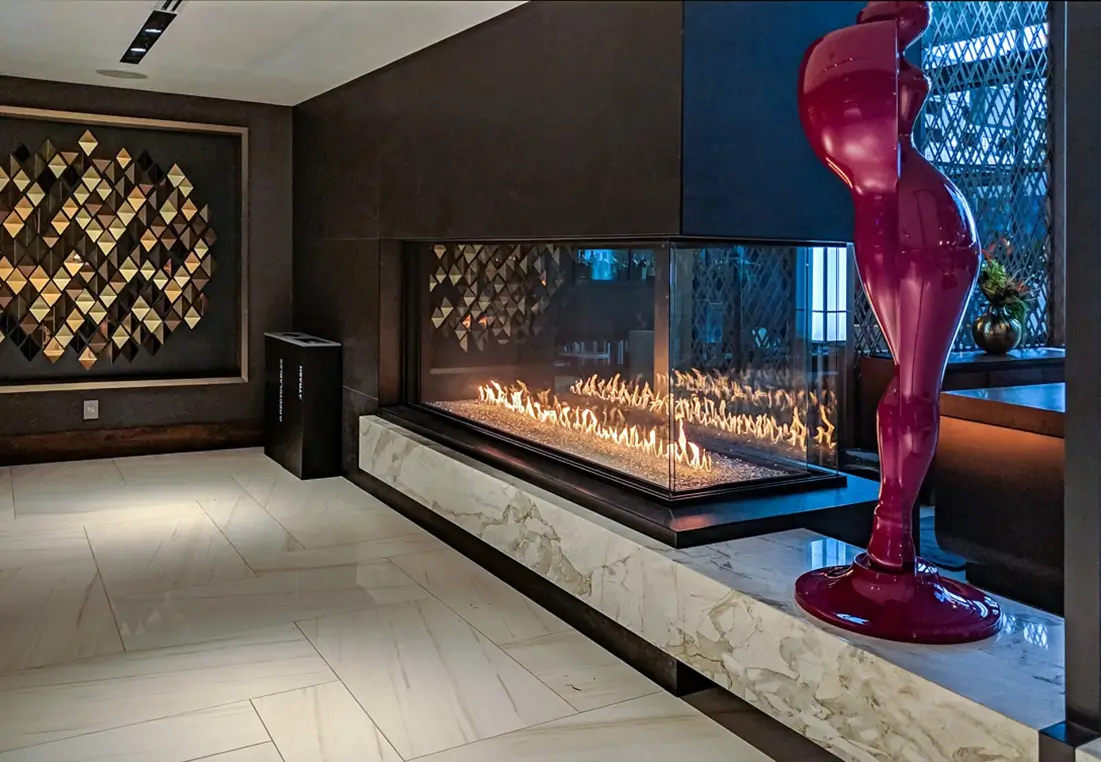
In today’s homes, the modern gas fireplace is shaping architecture, sightlines, and gathering spaces in ways that traditional fireplaces never did.
A well-designed room does not need to announce its focal point. In many homes, that role belongs to the fireplace. It draws the eye without overwhelming the space, shapes how furniture is arranged, and adds movement that makes the room feel more inviting and complete.
That’s one reason the modern gas fireplace has taken on a much larger role in residential design. It’s no longer viewed as a purely functional feature added at the end of a project. Today, it’s often considered early in the design process because it affects scale, flow, sightlines, and the overall atmosphere of the room. In many cases, it’s central to designing a fireplace, helping define the character of the space as much as any material or finish.
This evolution is also reflected in conversations around the biggest trends. The focus has shifted well beyond basic heating performance. Homeowners, architects, and builders are paying closer attention to clean architectural lines, wider viewing areas, seamless wall integration, and the refined visual impact driving today’s linear fireplace trends.
For homeowners, architects, and builders, these decisions matter more than ever. The right fireplace can influence the layout of an entire room, establish a clear visual hierarchy, and create a stronger sense of balance. When selected with intention, a modern gas fireplace becomes more than an amenity. It becomes a defining architectural feature.
Linear Fireplaces and the Rise of Horizontal Design
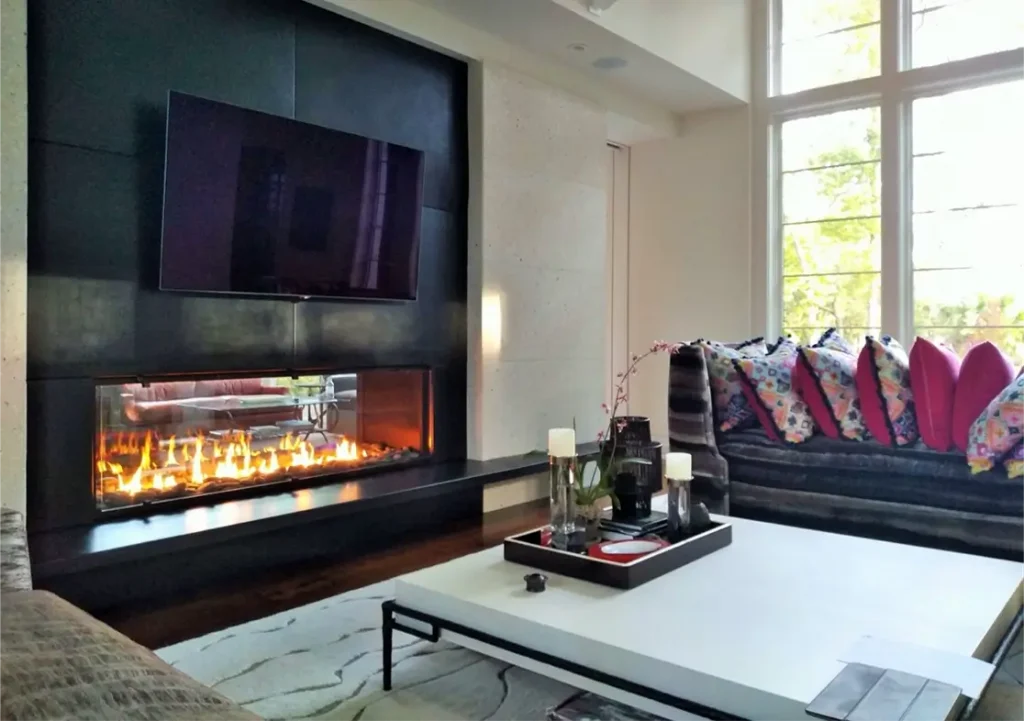
One of the most recognizable linear fireplace trends shaping interior design today is the shift toward longer, horizontal viewing areas. Instead of smaller fireboxes, designers are specifying fireplaces that stretch across the wall, creating a wider, more dramatic flame presentation. This approach fits naturally with the clean geometry of modern architecture while reinforcing the streamlined look that defines many contemporary homes.
In many cases, the modern gas fireplace becomes a structural design element rather than an accessory. The extended flame visually emphasizes horizontal lines that already exist in modern interiors, helping the fireplace feel integrated into the architecture instead of added onto it. This is one of the reasons the format has become so influential within luxury fireplace design, where scale and proportion are carefully considered from the earliest stages of planning.
These ideas are also central to many of the gas fireplace trends we’re seeing in 2026. Designers increasingly use longer fireplaces to anchor large walls in great rooms, open-concept living areas, and modern loft-style spaces. Wide viewing areas allow the flame to hold its presence even in rooms with tall ceilings or expansive layouts, giving the space a focal point that feels intentional rather than undersized.
Because of their shape and flexibility, linear fireplaces are often integrated into media walls or expansive architectural features finished in stone, plaster, wood, or steel. The length of the fireplace allows it to sit comfortably beneath televisions or architectural panels while still commanding attention within the room. When thoughtfully incorporated, the fireplace helps unify the wall composition and strengthens the overall design of the space.
Linear fireplace trends also support minimalist design. By emphasizing clean geometry and extended viewing areas, designers create fireplaces that feel embedded in the architecture rather than applied to it. For additional inspiration on how these installations are shaping modern interiors, explore our Contemporary Fireplace Design Trends for 2025 article.
Multi-View Installations and Open Floor Plan Connectivity
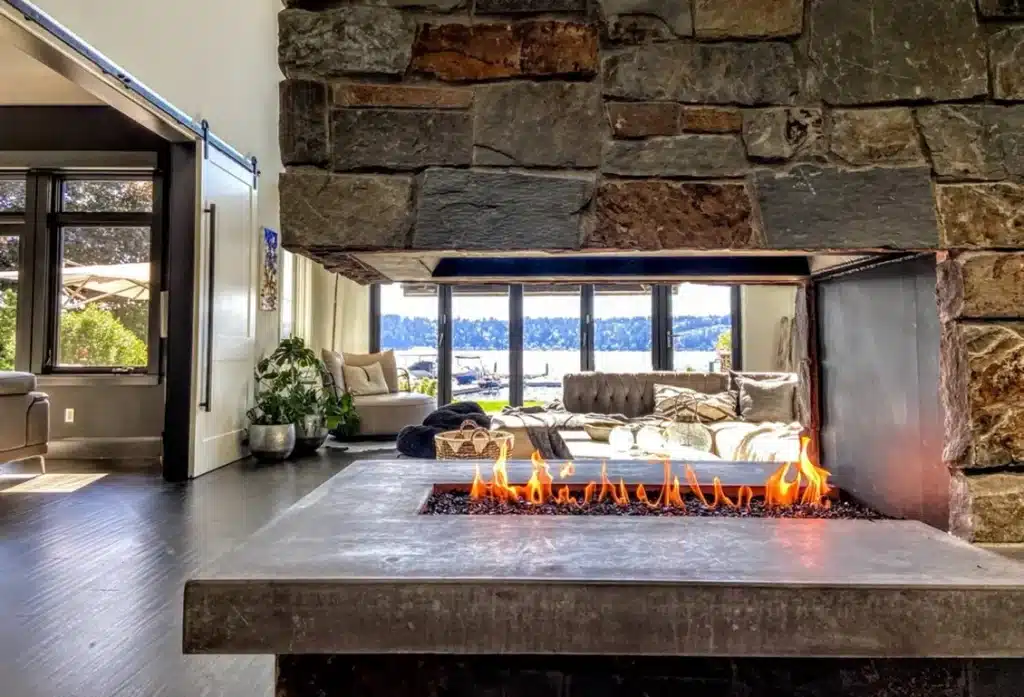
Open floor plans continue to shape gas fireplace trends in 2026, especially through the growing use of multi-view installations. Designers are increasingly specifying peninsula, corner, and three-sided fireplaces because they allow the flame to be experienced from more than one area of the home at the same time.
In many high-end projects, the gas fireplace no longer belongs to a single wall. Instead, it becomes a shared architectural element connecting adjacent spaces. A peninsula installation might extend from a wall to visually link a living room and dining area, while a three-sided fireplace can sit at the intersection of several zones within an open layout.
This design approach works particularly well in larger homes where maintaining visual continuity is important. Rather than interrupting the openness of the floor plan, the fireplace acts as a subtle divider that still preserves connection between rooms. The flame becomes visible from multiple vantage points, helping unify the surrounding spaces without closing them off.
Because of this balance between openness and definition, multi-view fireplaces have become an important feature in luxury fireplace design. The installation provides structure within an open environment while keeping sightlines clear. It allows the fireplace to function as a shared focal point that supports the overall layout of the home, reinforcing both the architectural flow and the sense of comfort that fire naturally brings to a space.
Expansive Viewing Areas and Minimal Framing
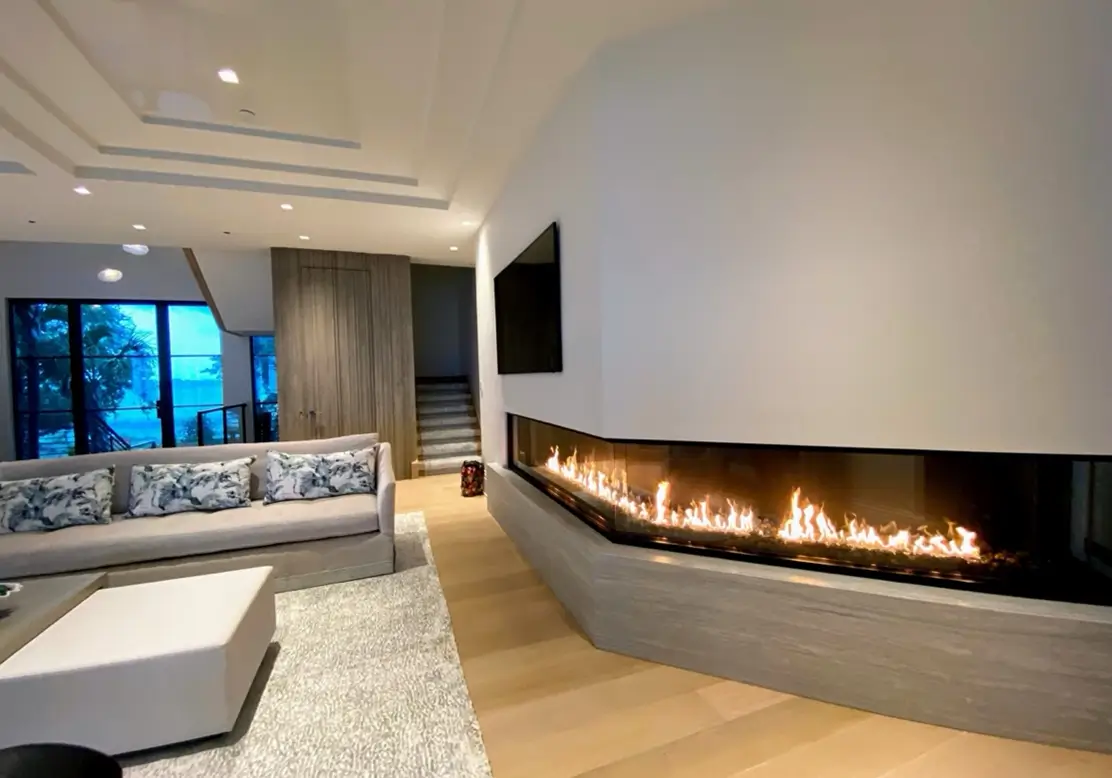
Another direction shaping gas fireplace trends is the growing preference for larger viewing areas paired with minimal framing. Designers increasingly prioritize fireplaces where glass dominates the visual presentation and surrounding elements remain intentionally understated.
With reduced metal surrounds and slimmer profiles, the flame appears almost suspended within the wall. This refined presentation draws attention to the movement, color, and texture of the fire rather than the appliance itself. The result aligns closely with current linear fireplace trends, where simplicity and clean architectural lines allow the flame to become the primary visual feature.
Large viewing areas also help maintain balance within contemporary interiors. In homes with tall ceilings, expansive walls, and open living spaces, a modern gas fireplace with a wide viewing window holds its presence without feeling bulky or intrusive. The extended glass surface allows the fire to read clearly across the room while still preserving the streamlined aesthetic that modern design favors.
This concept has become a defining element in fireplace design. Materials such as plaster, steel, porcelain, or natural stone are often used as subtle architectural backdrops, framing the fire without competing with it. When executed well, the fireplace feels less like a mechanical insert and more like a seamless extension of the wall itself, reinforcing the clean, intentional design language found throughout the home.
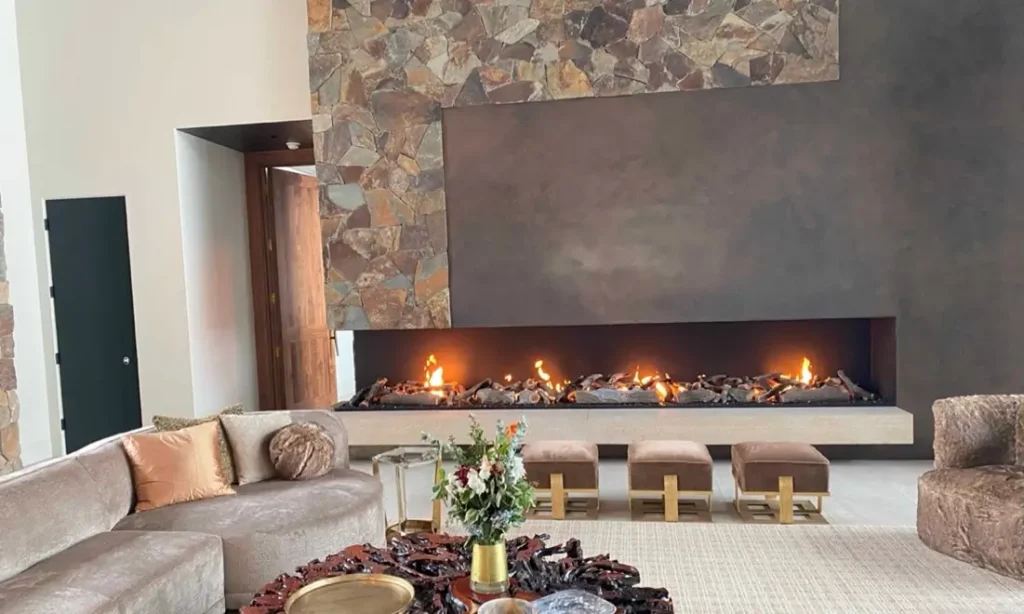
Fireplaces Integrated into Architectural Elements
Designers today are increasingly treating the fireplace as an architectural element rather than a decorative add-on. In many contemporary homes, the modern gas fireplace is integrated directly into larger structural features such as full-height feature walls, room dividers, and custom built-in millwork.
This design approach allows the fireplace to help organize the space. Instead of simply sitting along one wall, the fireplace can guide how rooms are arranged and experienced. It might separate a living room from a dining area, anchor a dramatic vertical wall, or introduce visual rhythm along a long interior elevation. These ideas have become an important part of this year’s gas fireplace trend—where the fireplace contributes to the layout and architectural composition of the home.
The concept is especially prominent in fireplace design, where the flame is paired with carefully selected architectural materials. Stone, plaster, porcelain panels, and metal surfaces are often layered around the fire to create depth and texture. Rather than acting as decoration, these materials work with the fireplace to strengthen the identity of the space.
When thoughtfully incorporated into the structure of the room, the fireplace becomes part of the home’s design language. In many cases, the modern gas fireplace feels less like an appliance placed within the room and more like an intentional architectural feature that shapes the space around it.
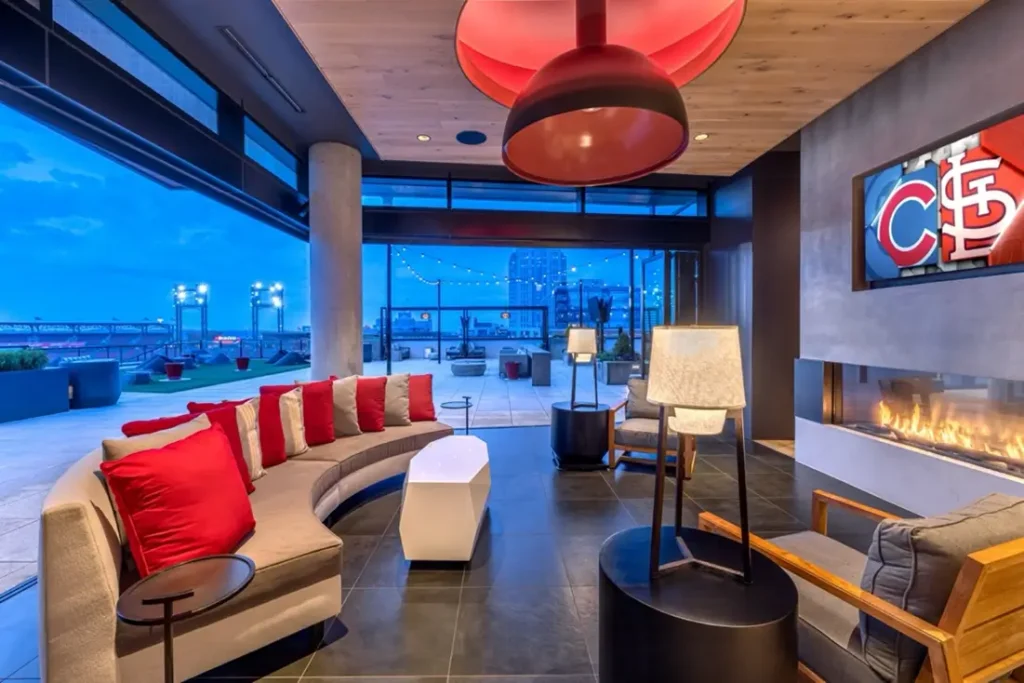
Indoor-Outdoor Fireplaces and Expanded Living Spaces
Another influence shaping gas fireplace trends in 2026 is the growing emphasis on connecting indoor and outdoor living environments. Designers are increasingly specifying installations that extend the presence of fire beyond the interior of the home, allowing it to become part of a broader architectural experience.
An indoor-outdoor gas fireplace can serve both a living room and a covered patio at the same time. This type of installation creates visual continuity between spaces while still maintaining comfort in each environment. From inside the home, the flame remains a focal point within the room. From the patio, it contributes warmth, atmosphere, and a sense of connection back to the interior.
Outdoor installations are also becoming more prominent in fireplace design, particularly in homes where patios, terraces, and pool areas function as everyday living spaces. A well-placed outdoor fireplace can anchor seating areas, frame views across the landscape, and introduce a sense of structure to the exterior design.
As homeowners continue to prioritize year-round outdoor living, fireplaces are increasingly used to guide the transition between environments. In many projects, the fire acts as a shared focal point that visually links interior rooms with outdoor gathering areas, reinforcing the idea that the landscape and the home are part of the same living experience.
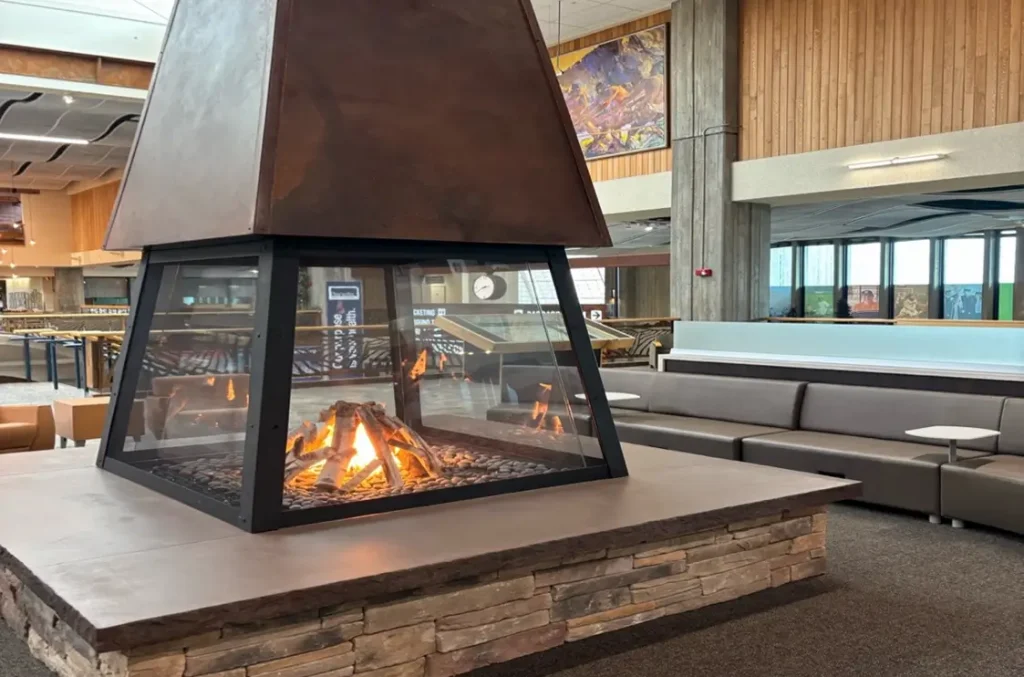
Customization and Spec-Level Design Flexibility
Customization has become one of the defining characteristics of modern gas fireplace design. Designers increasingly seek fireplaces that can adapt to the architecture of a project rather than forcing the project to adapt to standard fireplace dimensions.
Custom viewing areas, extended lengths, and tailored configurations allow the fireplace to align precisely with the proportions of the room. This flexibility helps designers maintain visual balance while ensuring the flame feels integrated with surrounding materials.
Burner configurations and flame presentation also play a role in this trend. Designers often select systems that allow them to adjust the appearance of the flame, so it complements the scale and character of the architecture.
This level of flexibility has become a defining feature of gas fireplace trends in 2026. As highlighted in our recent 2026 Fireplace Trends post, architects and builders increasingly view fireplaces as collaborative design elements rather than fixed appliances.
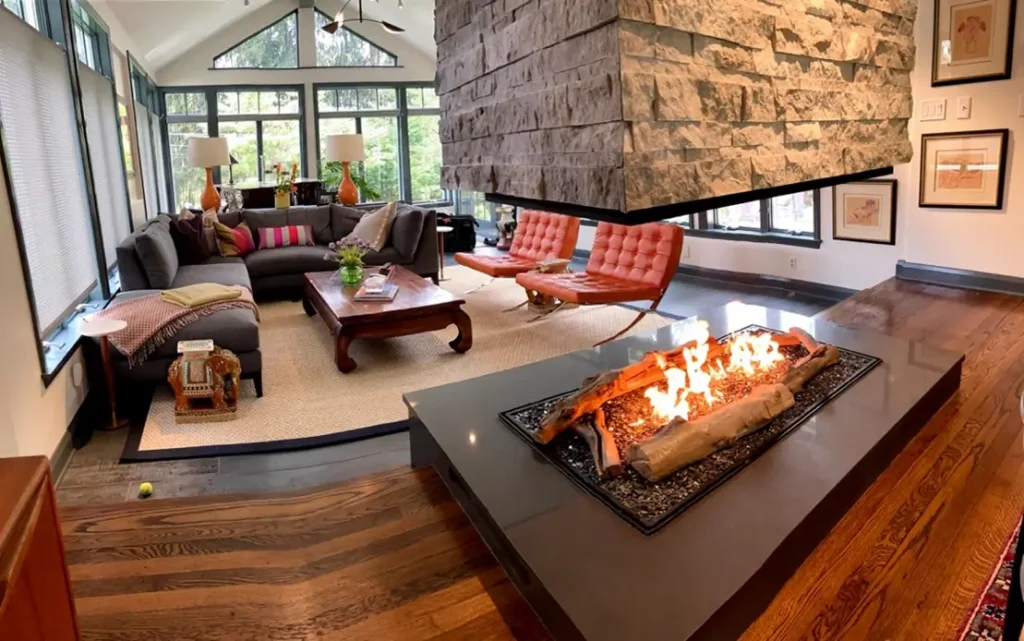
The Future of Modern Gas Fireplace Design
Taken together, the gas fireplace trends in 2026 reveal a clear shift in how fireplaces function within contemporary homes. Rather than being treated as standalone appliances, fireplaces are now considered integral design elements that influence layout, scale, and the overall architectural composition of a space.
Many of these changes are reflected in evolving linear fireplace trends. Longer viewing areas and horizontal proportions continue to shape modern interiors, allowing the flame to complement contemporary architecture. At the same time, multi-view installations are helping reinforce visual connections across open floor plans, while expansive glass viewing areas with minimal framing place the movement of the flame at the center of the experience.
These developments highlight how the modern gas fireplace has moved well beyond its traditional role as a heating feature. In many homes, it now helps establish the visual hierarchy of a room, guide how spaces relate to one another, and contribute to the overall atmosphere of the interior. This approach is a defining aspect of today’s luxury fireplace design, where materials, scale, and flame presentation are carefully coordinated with the surrounding architecture.
Acucraft collaborates with homeowners, architects, and builders to create modern gas fireplaces that align with both architectural vision and long-term performance. When the fireplace is planned early and integrated thoughtfully, it becomes a natural extension of the home’s design, offering both visual impact and enduring functionality.
For more inspiration, check out some of our Fireplace Stories with Chris Maxson videos:
Custom Pool Fireplace Design Where Fire Meets Water
Custom Restaurant Fireplace Design
A Montana Resort Fireplace gets a Custom Circular Gas Feature
Custom Gas Fireplace That Becomes the Centerpiece of Hotel Design
Ready to get started? Complete the form below to speak with one of our gas fireplace experts.