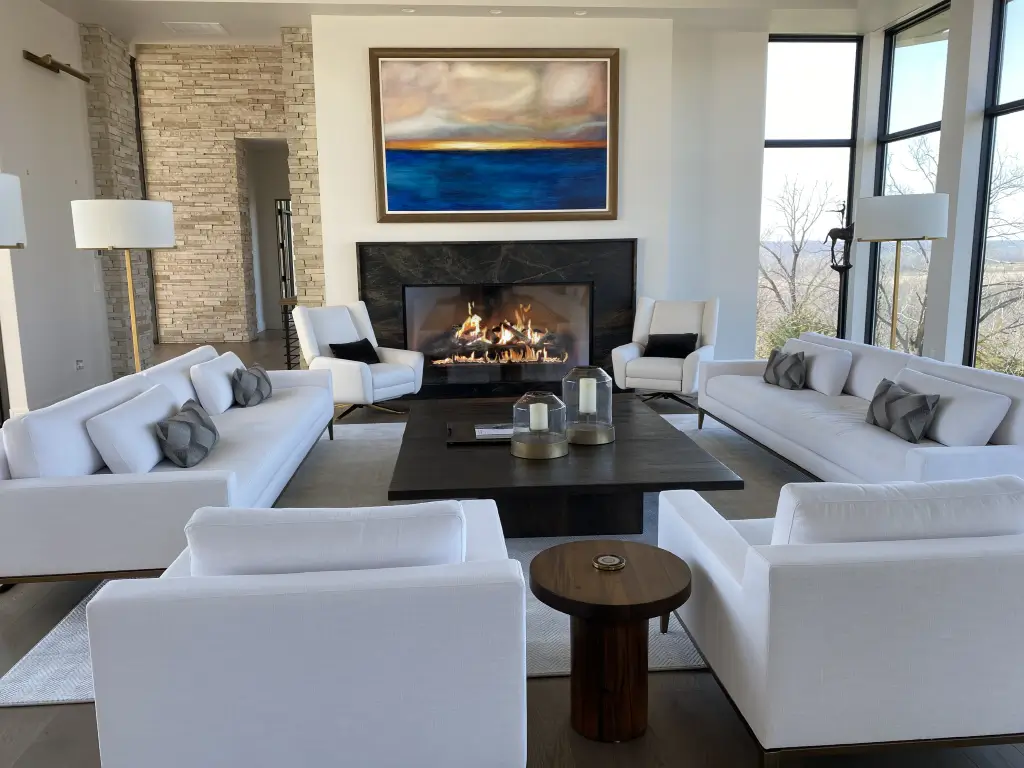
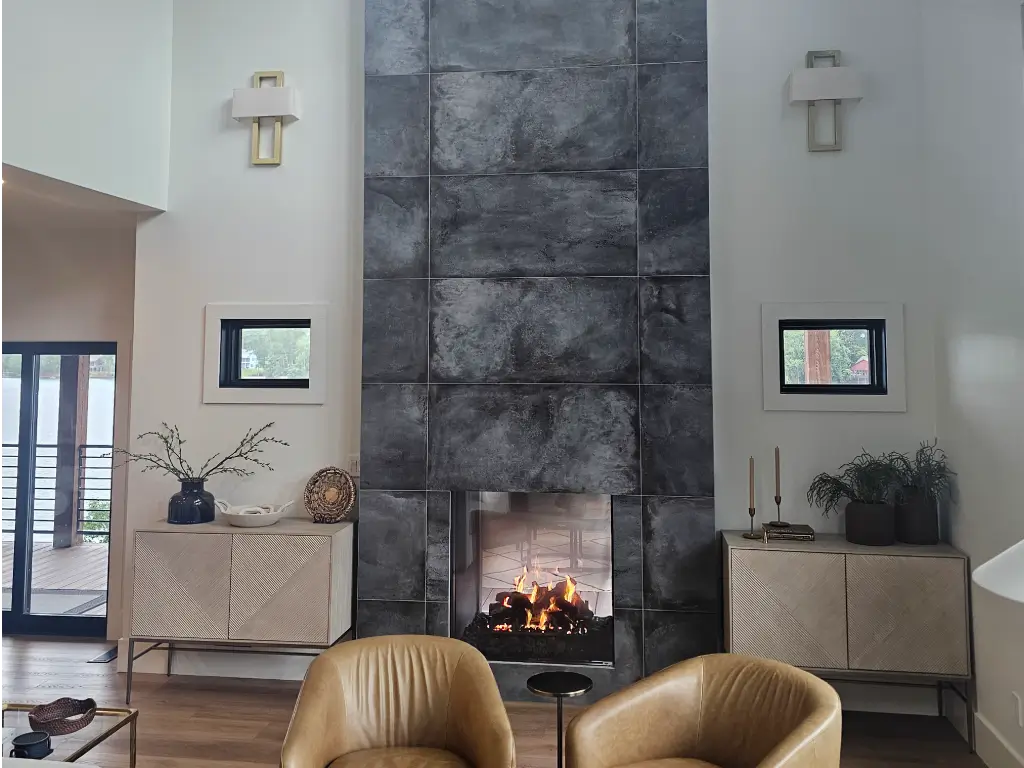
In a custom home, a gas fireplace should never be an afterthought
When you’re designing a custom home, every decision carries weight. Few elements, however, shape a space as immediately as fire. A gas fireplace does more than provide warmth. It establishes atmosphere. It draws the eye. It creates a sense of arrival the moment someone enters the room.In high-end custom homes, a gas fireplace isn’t a decorative afterthought. It’s often the architectural anchor, the element around which sightlines, materials, and spatial hierarchy are organized.
For architects, designers, and custom home builders, the real question isn’t whether a fireplace belongs in the plan. It’s how to specify it correctly. With today’s range of gas fireplace options, early decisions around style, scale, venting, and performance directly influence layout, coordination with other trades, and the long-term experience of the homeowner.
A poorly planned fireplace forces compromise later. A well-specified one elevates the entire project.
The takeaway is simple: gas fireplaces should be approached with the same discipline as any core architectural system. When the planning is right from the start, the result is a feature that feels intentional, integrated, and worthy of a truly custom home.
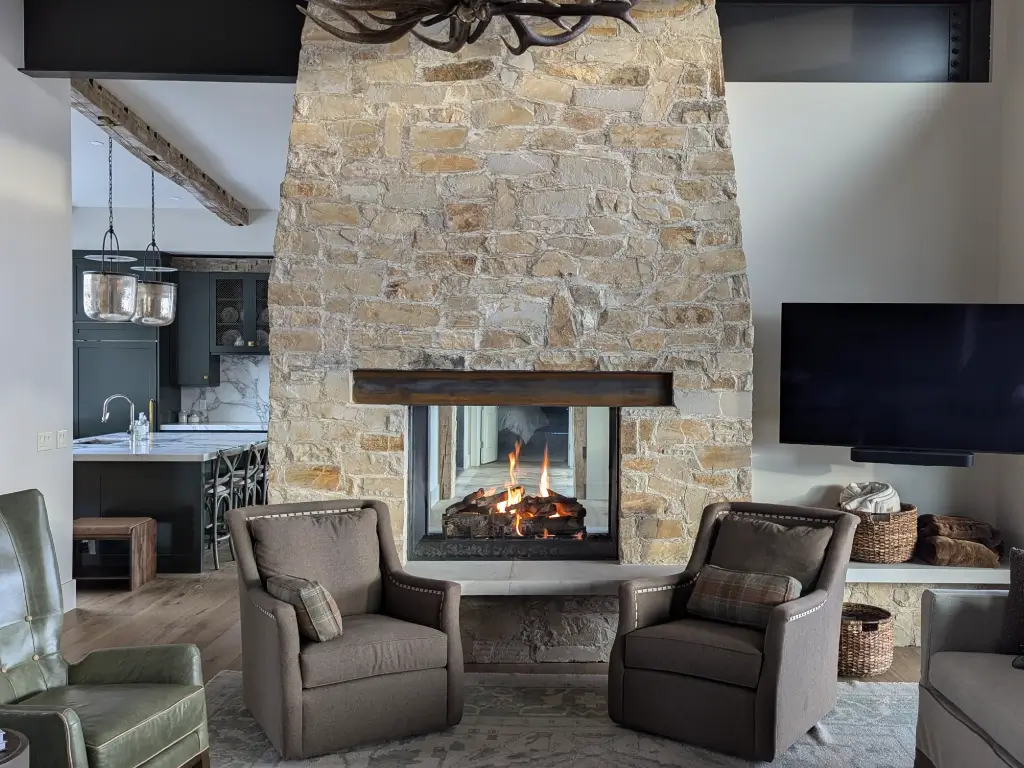
Why Gas Fireplaces Are a Popular Choice in Custom Homes
There’s a reason gas fireplaces remain a preferred choice in luxury residential design. They offer a level of consistency, control, and reliability that other fuel types struggle to match. Performance is predictable. Operation is effortless. And the result fits naturally into modern lifestyles.The real advantage, however, lies in design flexibility. Today’s luxury gas fireplaces can be tailored to complement virtually any architectural expression, from classic and transitional homes to clean, contemporary spaces. They function as both a source of warmth and a sensory feature, delivering comfort while shaping mood, scale, and visual balance throughout the room.
In a well-designed home, a gas fireplace isn’t just practical. It’s experiential.
If you’ve got a homeowner considering this option, our article 10 Reasons a Custom Gas Fireplace Might be Perfect for Your Home offers a helpful overview of why gas continues to be such a popular choice.
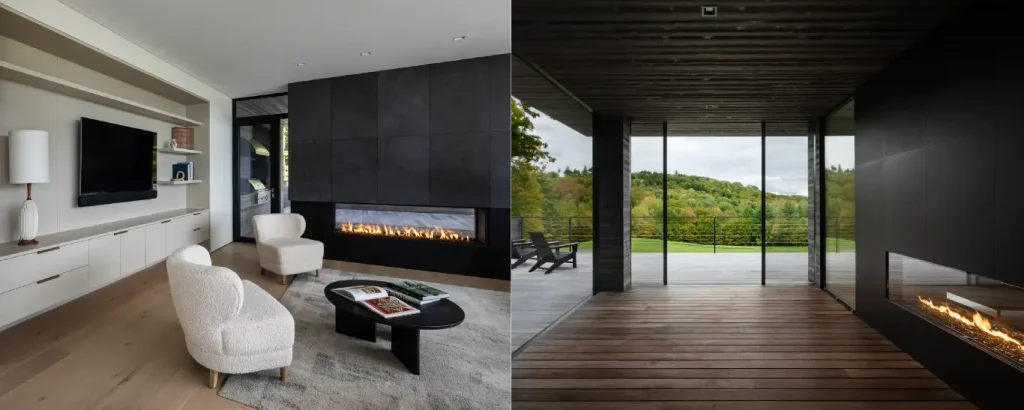
Understanding Styles and Configurations in Modern Gas Fireplace Design
Modern gas fireplace design offers a broader range of options than ever before. Linear fireplaces introduce a clean, horizontal profile that aligns naturally with contemporary architecture, while traditional and transitional styles bring a sense of familiarity and warmth to more classic home designs.Configuration is just as critical as style. Single-sided fireplaces establish a strong, intentional focal point, while see-through, corner, and multi-view designs allow fire to visually connect adjacent spaces. These choices shape sightlines, influence circulation, and affect how rooms interact with one another, making the fireplace an active participant in the home’s overall spatial experience rather than a standalone feature.
Proportion and scale matter as well. A well-sized gas fireplace reinforces the architecture rather than competing with it. If you’d like to see how these trends are shaping today’s designs, check out our Modern Gas Fireplace Trends of 2025 article.
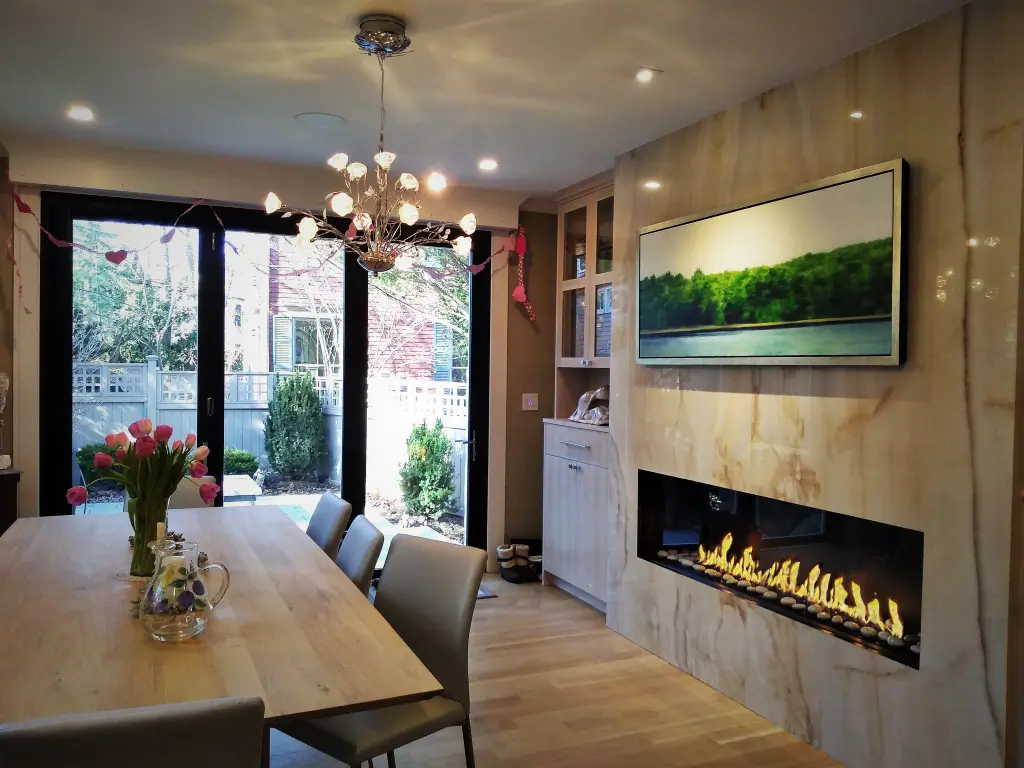
The Value of a Custom Gas Fireplace
Standard models can satisfy basic requirements, but in truly custom homes, off-the-shelf solutions often impose limitations. A custom gas fireplace gives you control over proportions, finishes, and detailing so the final result aligns precisely with the project’s intent.Custom gas fireplaces integrate cleanly with surrounding architecture rather than competing with it. They support the overall design language of the home instead of forcing aesthetic or technical compromises. When you collaborate with Acucraft, each fireplace is developed to reflect both the creative vision and the practical demands of the build.
The result is not just a feature for today, but a long-term design investment that enhances the home’s character and value for years to come.
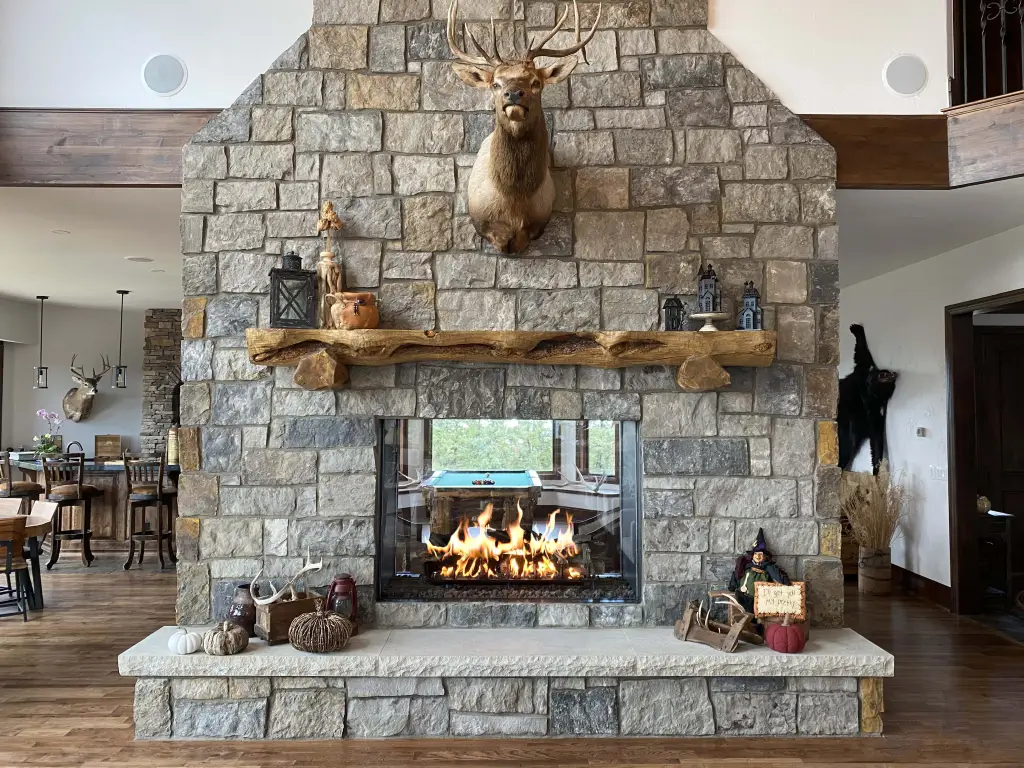
Spec Path Considerations for Gas Fireplaces
When it comes to specifying gas fireplaces, timing matters. The earlier the decision is made, the smoother the rest of the project becomes. Venting routes, clearances, structural requirements, and mechanical coordination all have downstream effects on layout and detailing. Addressing those factors during the planning phase is far easier than trying to resolve conflicts once construction is already underway.Early specification reduces friction with HVAC systems, framing, and interior finishes. Just as importantly, it protects the original design intent by preventing last-minute compromises driven by technical constraints. Acucraft works closely with architects, designers, and builders early in the process to ensure each gas fireplace integrates cleanly with the broader architectural and mechanical systems of the home.
The result is a more predictable build process and a finished space that looks and performs exactly as intended.
For a deeper look into technical considerations, A Comprehensive Guide to Gas Fireplaces: Types, Costs and Dimensions offers additional context.
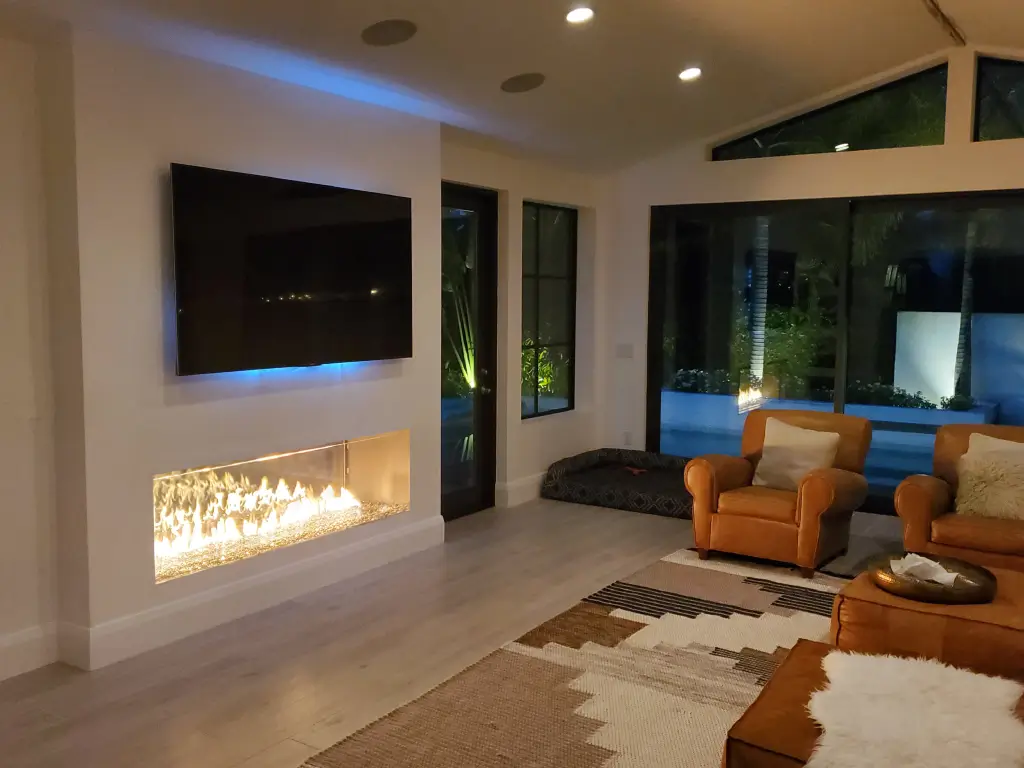
Safety, Air Quality, and Ease in Gas Fireplace Design
In today’s residential design, a gas fireplace is as much an engineered system as it is a visual element. Precision combustion and carefully regulated output allow for consistent, dependable performance, creating comfort without unpredictability.At the luxury level, these fireplaces are built to be lived with, not worked around. Simple, intuitive controls remove friction from everyday use, while durable components support long-term reliability. When safety, indoor air quality, and user experience are addressed as a single system, the fireplace becomes something homeowners engage with confidently, day after day, rather than a feature they hesitate to use.