
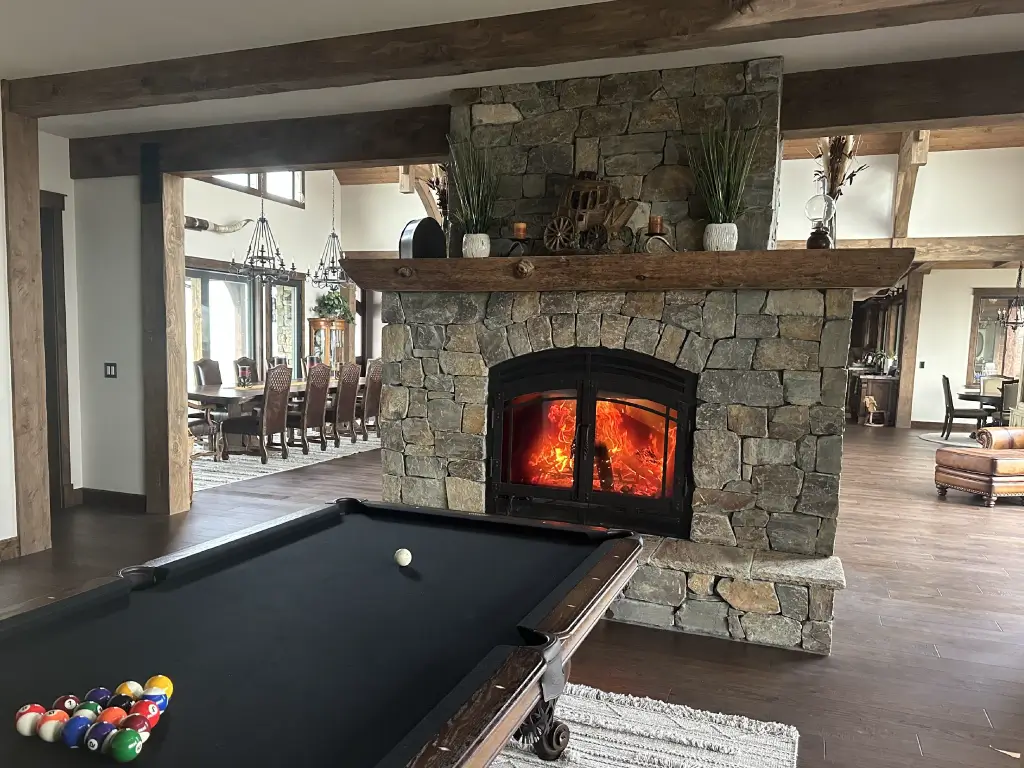
A see-through fireplace can elevate an entire floor plan. In the wrong layout, it becomes a compromise.
Walk into a thoughtfully designed home and you can immediately sense how each space flows into the next. Sightlines feel intentional. Movement happens naturally. Each room holds its own identity while still contributing to a larger, cohesive experience. In many of these environments, fire is not just decorative. It quietly shapes how the home feels and functions.
A see-through wood fireplace introduces a different level of spatial connection. Rather than living on a single wall, it creates a visual bridge between two areas. The flame becomes a shared focal point, visible from multiple angles, reinforcing continuity without sacrificing separation. It allows adjacent spaces to feel linked while still maintaining their purpose.
This is exactly why the double-sided wood fireplace has become such a defining element in modern luxury wood fireplace design. When done correctly, it enhances openness, adds depth, and creates a refined architectural moment that feels intentional rather than added on.
However, this type of fireplace is not a plug-and-play feature. It demands precision. Many homeowners assume that simply installing a see-through wood fireplace will elevate their layout. In reality, success depends on proportion, placement, and how well the fireplace integrates with the surrounding architecture.
When those elements align, the result feels seamless. Fire enhances both spaces equally, strengthening the overall design. When they do not, even a high-end double-sided wood fireplace can feel disconnected or forced, ultimately diminishing the experience it was meant to elevate.
Understanding when a layout truly supports a see-through wood fireplace is what separates a striking architectural feature from a missed opportunity.
What Defines a See-Through or Double-Sided Wood Fireplace
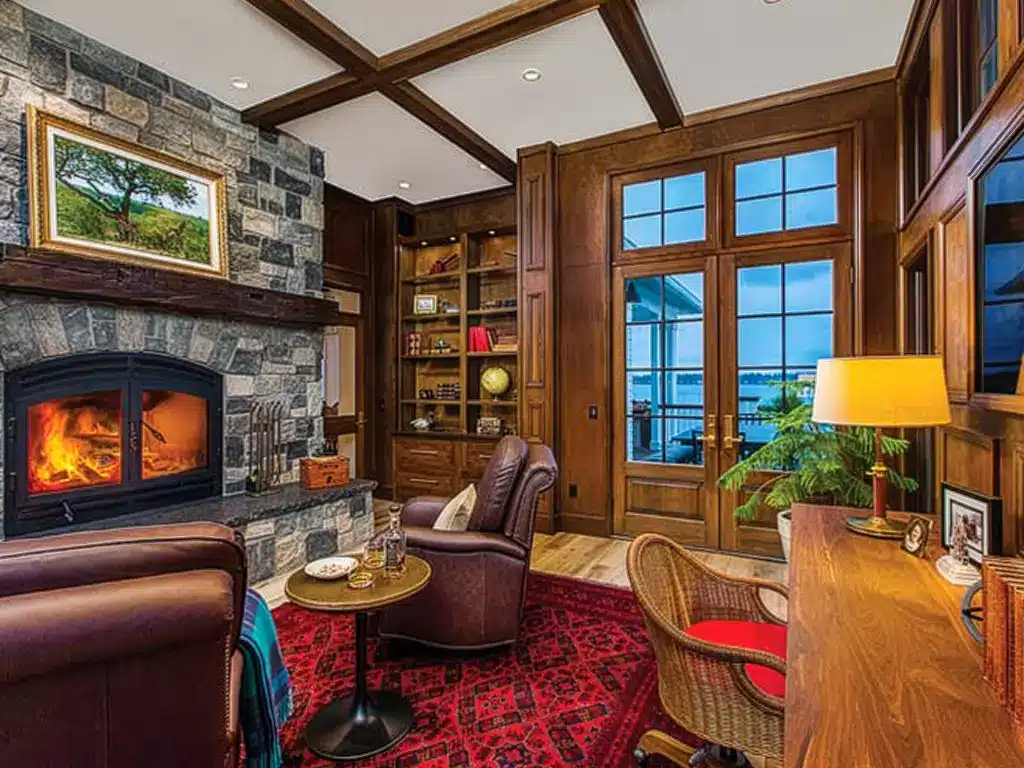
At its core, a see-through wood fireplace is built around a single firebox with two viewing sides. The flame is visible from both directions, allowing it to serve two distinct spaces at the same time. While the idea sounds simple, the design execution is far more complex.
Unlike a traditional fireplace that anchors one wall and one room, a double-sided wood fireplace has to perform in two environments simultaneously. Each side interacts differently with seating layouts, traffic flow, and architectural elements. Both perspectives need to feel complete, not secondary.
You’ll often find a see-through wood fireplace placed between a living room and dining area or used to connect indoor living spaces with an outdoor patio. In high-end luxury wood fireplace design, the goal goes beyond separation. The intention is to create a seamless visual connection that feels balanced, deliberate, and fully integrated into both spaces.
For a deeper look at configuration options and how these fireplaces are categorized, explore Types of Wood Burning Fireplaces by Acucraft. Understanding the distinctions early helps clarify whether a see-through wood fireplace aligns with the broader design vision.
When the Layout Truly Supports a Double-Sided Fireplace
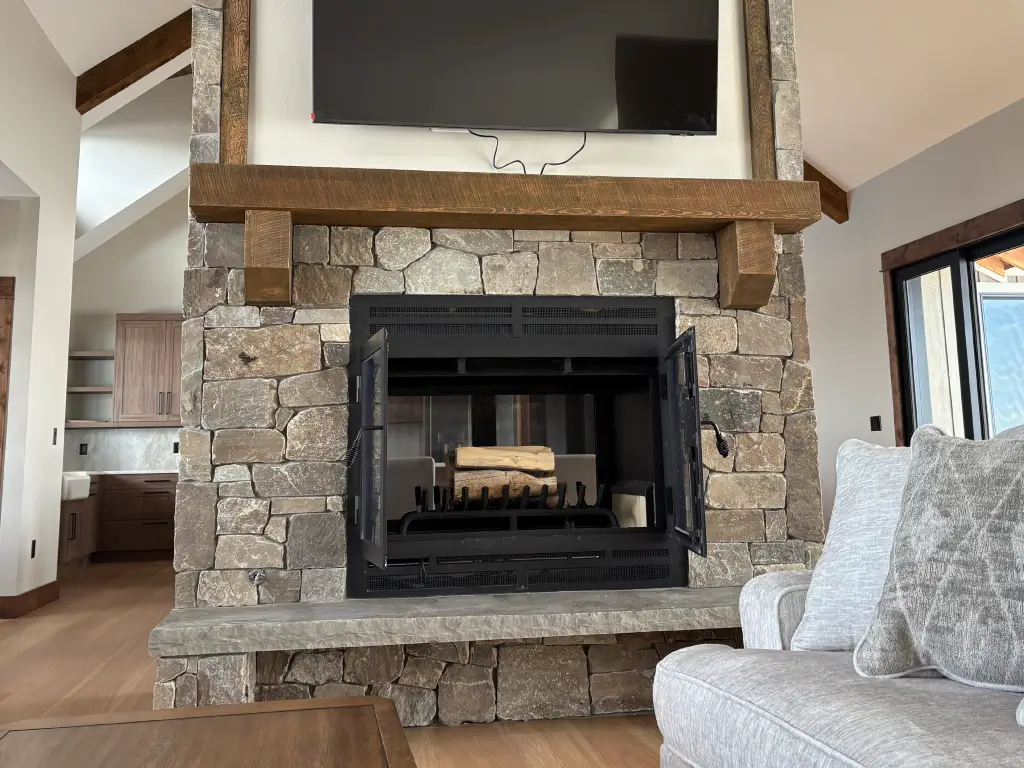
Not every layout is improved by adding a double-sided wood fireplace. The most successful designs happen when both adjoining spaces have a clear, shared reason to revolve around the same focal point.
In many luxury wood fireplace design projects, this works especially well between a living room and dining area. A see-through wood fireplace creates a visual link while still allowing each space to function independently. It can also be highly effective between an indoor living area and an outdoor patio, where the fire helps connect interior comfort with the open-air environment.
Balance is critical. Each side of the see-through wood fireplace should feel equally intentional. If one space treats the fireplace as the main feature while the other treats it as an afterthought, the overall design starts to feel off. The goal is for both sides to carry equal visual weight.
Circulation is another key factor. A double-sided wood fireplace should never disrupt how people naturally move through a space. Instead, it should help organize it. When positioned correctly, it can subtly define pathways, frame gathering areas, and improve flow without creating barriers.
Designers often evaluate these installations with a simple but important question: does each side truly deserve the presence of fire? In refined luxury wood fireplace design, that question ensures the fireplace enhances both spaces rather than forcing a connection that does not naturally belong.
Sightlines, Proportion, and Viewing Area in Luxury Wood Fireplace Design
The success of a see-through wood fireplace depends far more on execution than on the concept itself. Two factors tend to make or break the design: proportion and sightlines.
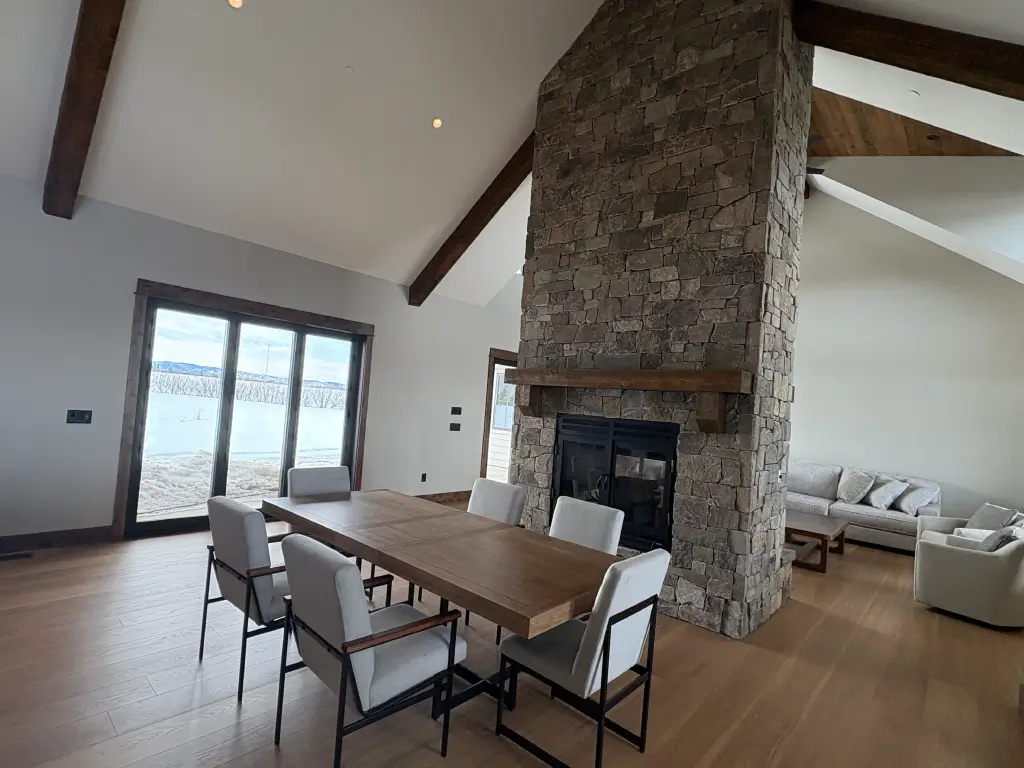
The viewing area has to feel appropriate in both spaces. A double-sided wood fireplace that looks perfectly scaled in one room can feel too small or overly dominant in the other if the rooms differ in size or ceiling height. Designers often fine-tune the opening width, firebox height, and placement to ensure the flame feels balanced from both perspectives, not just one.
Sightlines are just as important. A see-through wood fireplace should be visible from primary seating areas without forcing people to adjust how they sit or move. When the flame naturally falls into view along common pathways and gathering spots, it strengthens the flow of the space and makes the fireplace feel integrated rather than imposed.
Equally important is what surrounds the fireplace. Adjacent walls, window placements, and architectural details all shape how the fire is experienced. In high-end luxury wood fireplace design, these surrounding elements are often intentionally restrained. By simplifying the backdrop, designers allow the flame to remain the focal point without unnecessary visual competition.
For inspiration on how proportion and viewing area come together in refined designs, check out our post titled: Modern See-Through Fireplace: A Sophisticated Design Statement for Contemporary Spaces. It contains some great examples that highlight how subtle adjustments can dramatically improve the outcome.
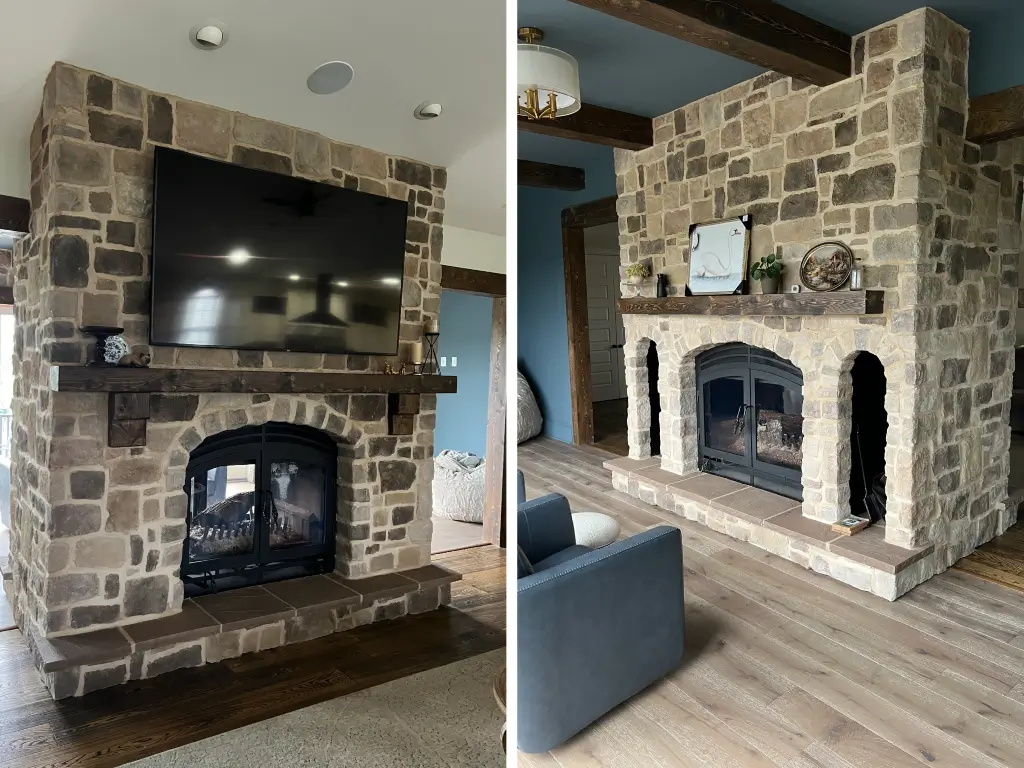
Architectural Integration and Material Expression
A double-sided wood fireplace reaches its full potential when it is designed as part of the architecture, not added as an afterthought.
In well-executed homes, these fireplaces are often built directly into structural elements like partitions, feature walls, or substantial stone masses that help define the layout. This approach is a defining characteristic of elevated luxury wood fireplace design, where the fireplace is considered early in the architectural process rather than introduced later.
Material selection plays a critical role in how the fireplace is perceived. Finishes like stone, steel, and smooth plaster can highlight the presence of a see-through wood fireplace while still maintaining a unified design language throughout the space. The objective is not to make the fireplace feel like a standalone object, but to let it enhance and belong to the surrounding architecture.
When this level of integration is achieved, a see-through wood fireplace does more than visually connect two rooms. It strengthens the identity of the entire environment, making the space feel intentional, cohesive, and architecturally complete.
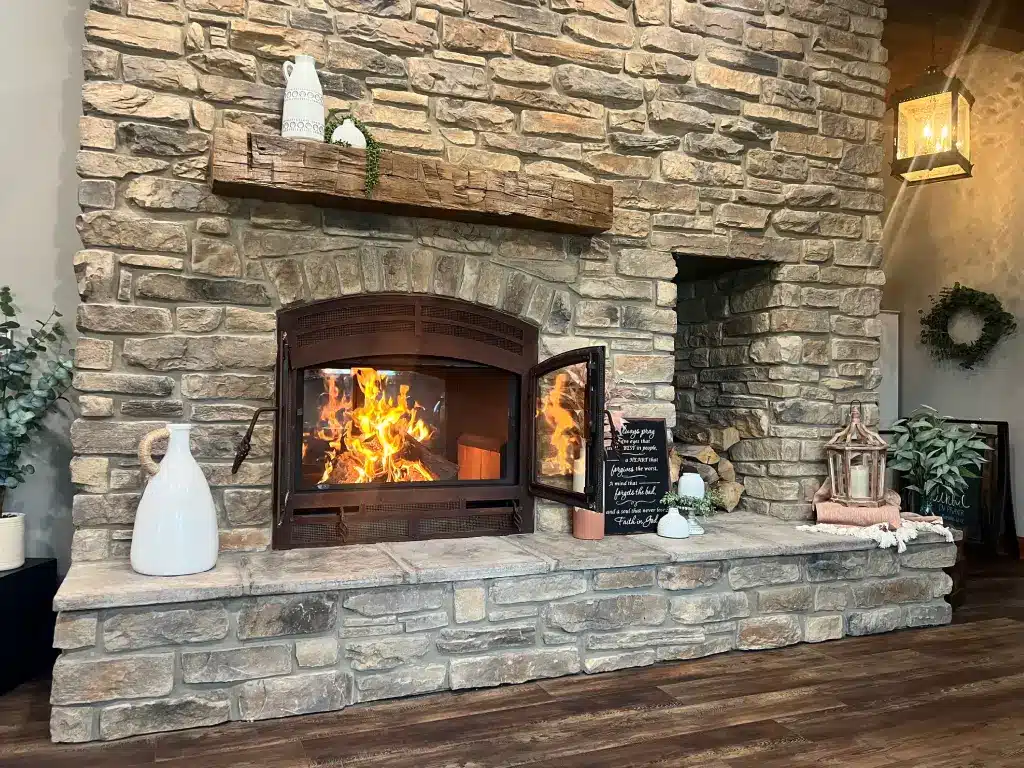
Planning for Performance and Everyday Use
Beyond aesthetics, a double-sided wood fireplace demands careful planning to ensure it performs as well as it looks.
Venting and drafting are critical in any wood-burning system, but they become even more nuanced with a see-through wood fireplace. Because the fire is exposed to two spaces, airflow must be precisely managed to maintain consistent combustion from both sides. Poor drafting can quickly undermine both performance and user experience.
Clearances and placement also need to be resolved early. A double-sided wood fireplace serves two rooms, which means both sides must meet safety requirements for distance from furniture, finishes, and structural elements. This typically requires close coordination between architects, builders, and fireplace specialists to ensure nothing is overlooked.
Day-to-day usability is another key consideration. Designers think through how the fireplace will actually be used. Where will wood be loaded? Which side will be accessed for maintenance? How will both viewing areas remain functional without disrupting the surrounding layout? These practical details directly influence how successful the installation feels over time.
When these elements are addressed from the start, the fireplace delivers reliable performance while enhancing the overall experience. In refined luxury wood fireplace design, functionality and placement are never separate decisions. They work together so the fireplace operates seamlessly while elevating the space it serves.
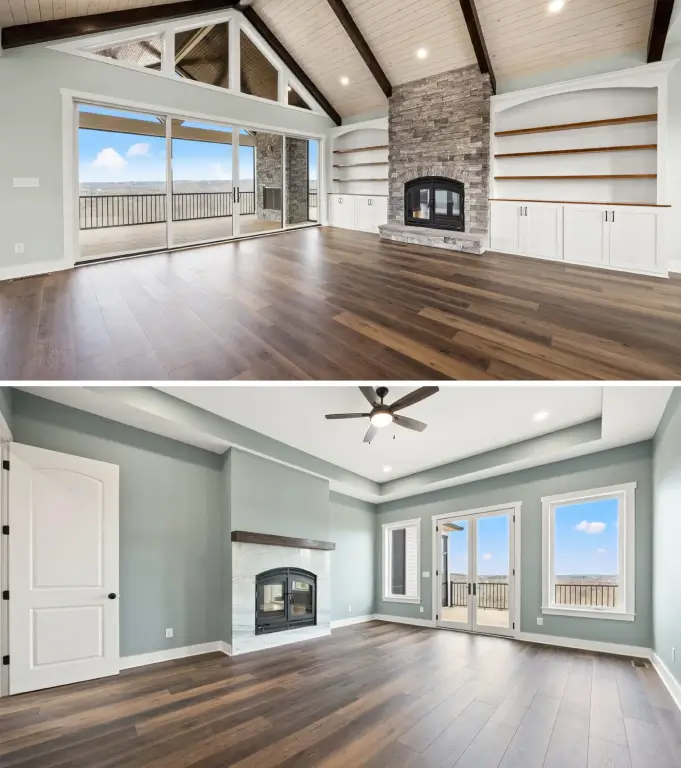
Where See-Through Fireplaces Make the Greatest Impact
The most compelling see-through wood fireplace installations are the ones that strengthen how spaces relate to one another.
Between a living room and dining area, the fireplace creates a shared focal point that naturally encourages movement and interaction. The flame acts as a visual thread, tying the two spaces together while still allowing each to serve its own function. A well-placed double-sided wood fireplace makes the transition between these areas feel intentional rather than segmented.
When used between interior and exterior spaces, the effect becomes even more impactful. A see-through wood fireplace that opens to a patio or terrace extends the experience of fire beyond the home’s walls. It creates a smooth transition between indoor comfort and outdoor living, allowing both environments to feel connected and equally inviting.
In larger residences, a double-sided wood fireplace is sometimes used to link more private spaces, such as a sitting area within a primary suite. In these scenarios, luxury wood fireplace design shifts toward creating a sense of intimacy while still maintaining a strong architectural presence that anchors both areas.
For real-world examples of how these installations come to life, explore our See-Through Wood Fireplace Photo Gallery. These projects demonstrate how thoughtful placement can transform the way spaces relate to one another.
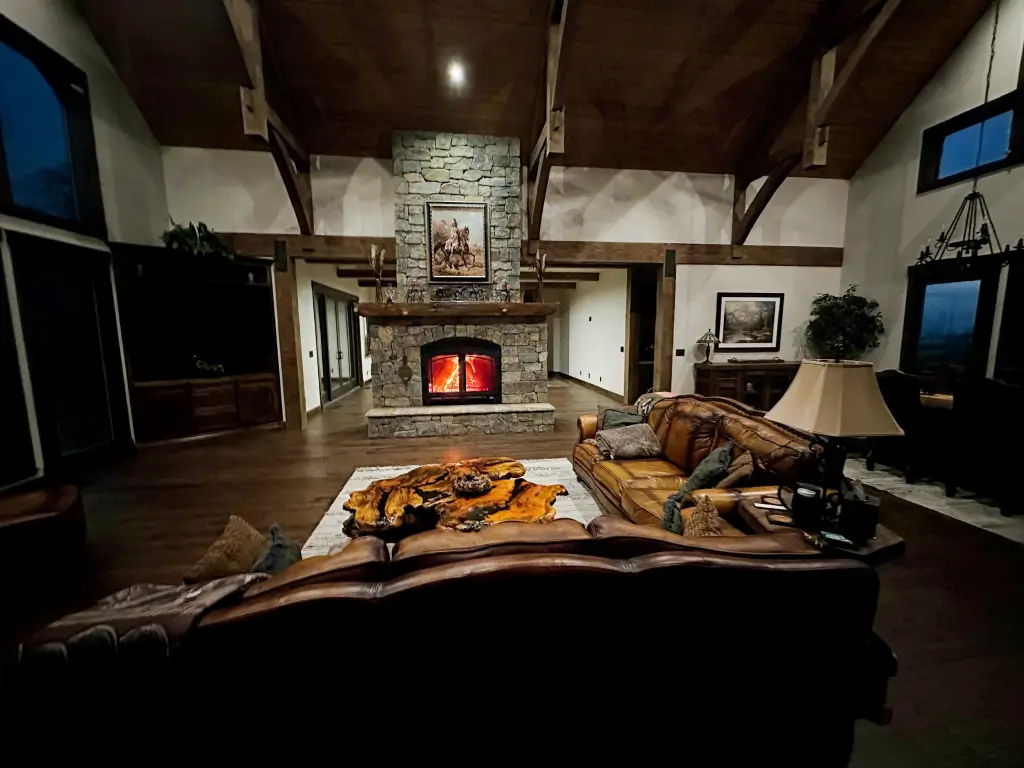
When Fire Connects Architecture
A see-through wood fireplace succeeds when the layout supports it. It is not simply a feature to be added, but a decision that should emerge from the architecture of the home.
When both spaces benefit equally, the result feels natural. The flame connects rooms without overpowering them. It reinforces sightlines, supports gathering areas, and enhances the overall flow of the design.
When the layout does not support it, the same fireplace can feel forced. Focal points become unclear. Furniture layouts become compromised. The connection between spaces weakens rather than strengthens.
Acucraft works with homeowners, architects, and builders to design see-through and double-sided wood fireplaces that align with the structure of the home. By approaching these installations as architectural decisions rather than decorative additions, the result is a fireplace that feels intentional, balanced, and enduring.
Check out our product page to learn more about our line of American double-sided and Hearthroom see-through fireplaces.
Watch a brief video to experience the warmth and beauty of a Hearthroom 36” see-through wood burning fireplace in action.
Or, complete the form below to begin the conversation with one of our gas fireplace experts.