

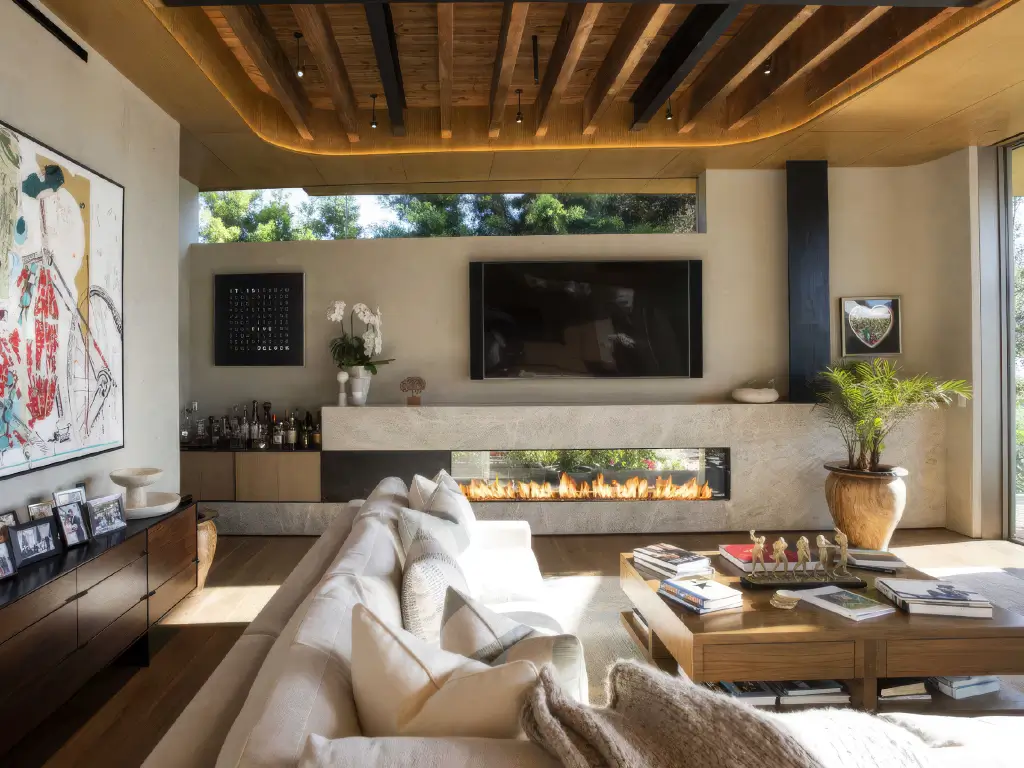
Indoor-Outdoor Living Starts With Connection
Great indoor-outdoor living spaces feel easy and natural. Open doors can turn a great room into part of the patio, and a covered lounge can flow right from the kitchen. With the right design, you can keep the outdoors connected to your home, even when you’re inside.
For luxury homeowners, this connection makes it easier to entertain, relax, and enjoy the property year-round. For architects, designers, and builders, it means thinking about the whole home, not just single rooms. Sightlines, materials, how people move, and the way spaces connect all help the home feel unified.
An indoor-outdoor gas fireplace can tie the whole design together. Rather than serving just one room, it becomes a shared feature inside and out. The flame brings supplemental warmth, movement, and atmosphere to both sides, giving each area its own feel while still connecting them as part of one home.
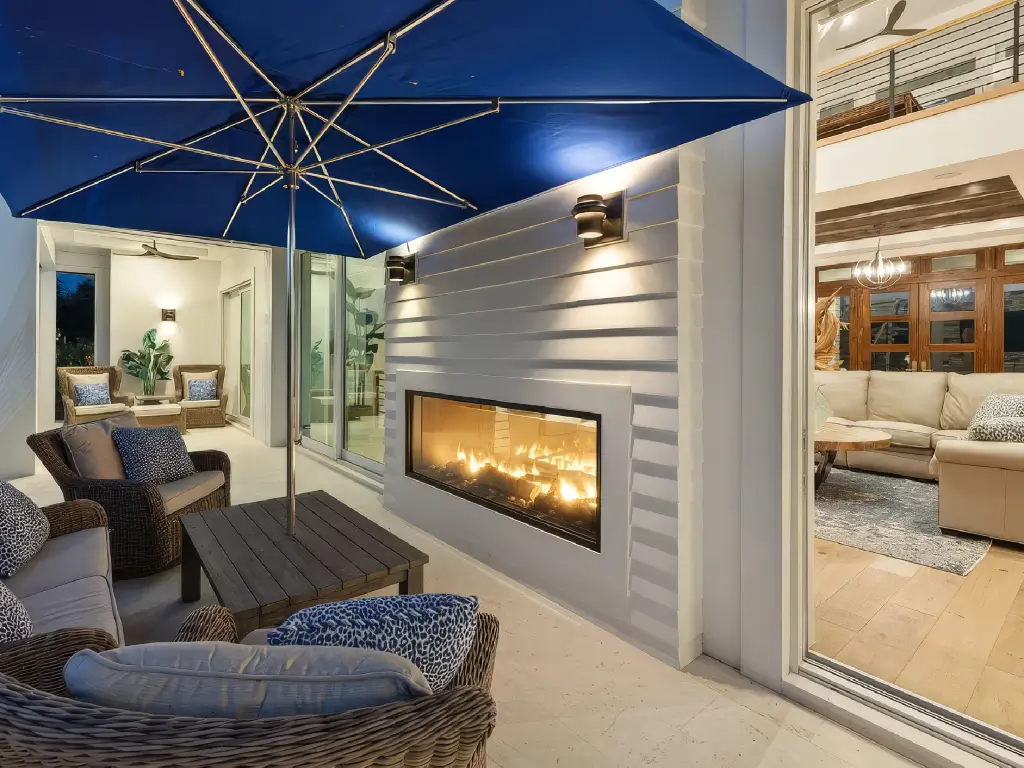
What’s an Indoor-Outdoor Gas Fireplace?
An indoor-outdoor gas fireplace is made to be enjoyed from both inside and outside. It creates a shared focal point between two areas that might otherwise feel separate, helping the space look and feel more connected.
The main benefit of an indoor-outdoor gas fireplace is that it belongs to two spaces at the same time. Inside, it can anchor a great room, dining area, living room, or main bedroom. Outside, it can add to a covered patio, pool deck, outdoor lounge, or entertaining space. Since it needs to look and work well from both sides, it’s important to plan the design carefully.
For homeowners creating indoor-outdoor living spaces, a shared fireplace can make moving between indoors and outdoors feel more natural and planned. For architects, designers, and builders, it creates an important focal point to design around. Room layout, furniture, materials, weather exposure, and the view of the flame from each side all need to work together as part of the design.
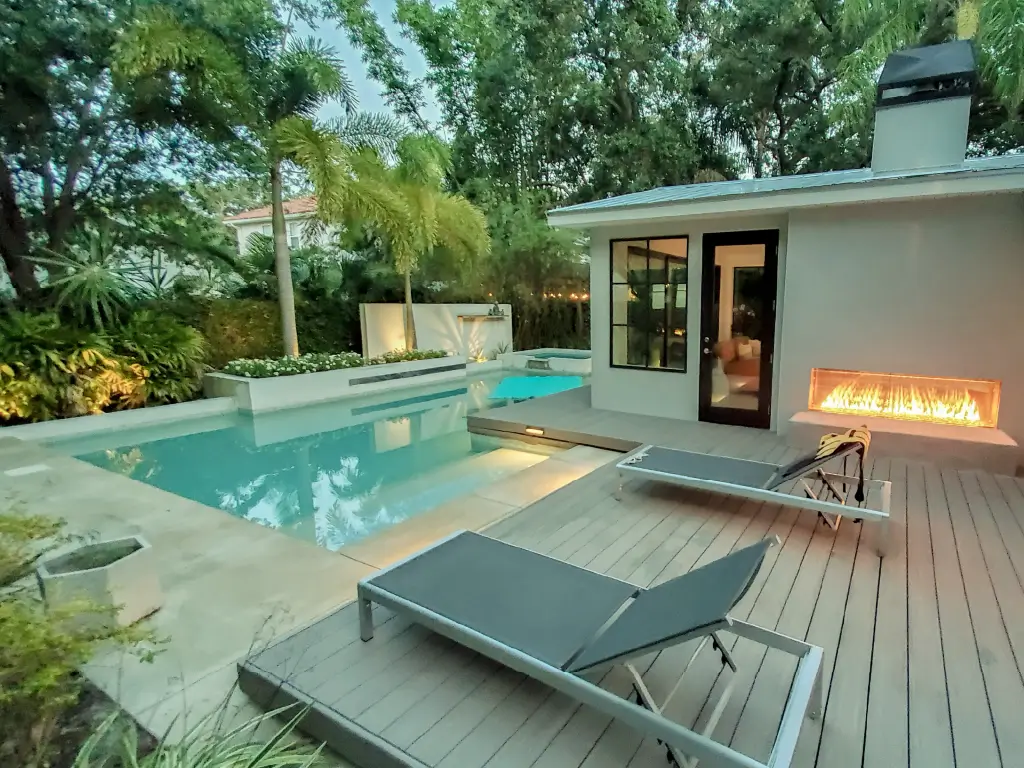
How an Indoor-Outdoor Fireplace Supports Entertaining and Everyday Flow
When you have guests, they often move from the kitchen to the patio and back again. An indoor-outdoor gas fireplace gives these spaces a shared focal point, so neither area feels cut off from the other.
Since you can enjoy the fireplace from both sides, it fits the way people move through the home. A conversation that starts in the great room can continue outside. The dining area can feel linked to the terrace, and even a poolside gathering keeps a visual connection to the inside.
This connection can also make daily routines more enjoyable. Having coffee on the patio feels like part of your living room, and evenings are more inviting when you can see the flame from different spots. With good placement, an indoor-outdoor gas fireplace helps the indoors and outdoors blend together.
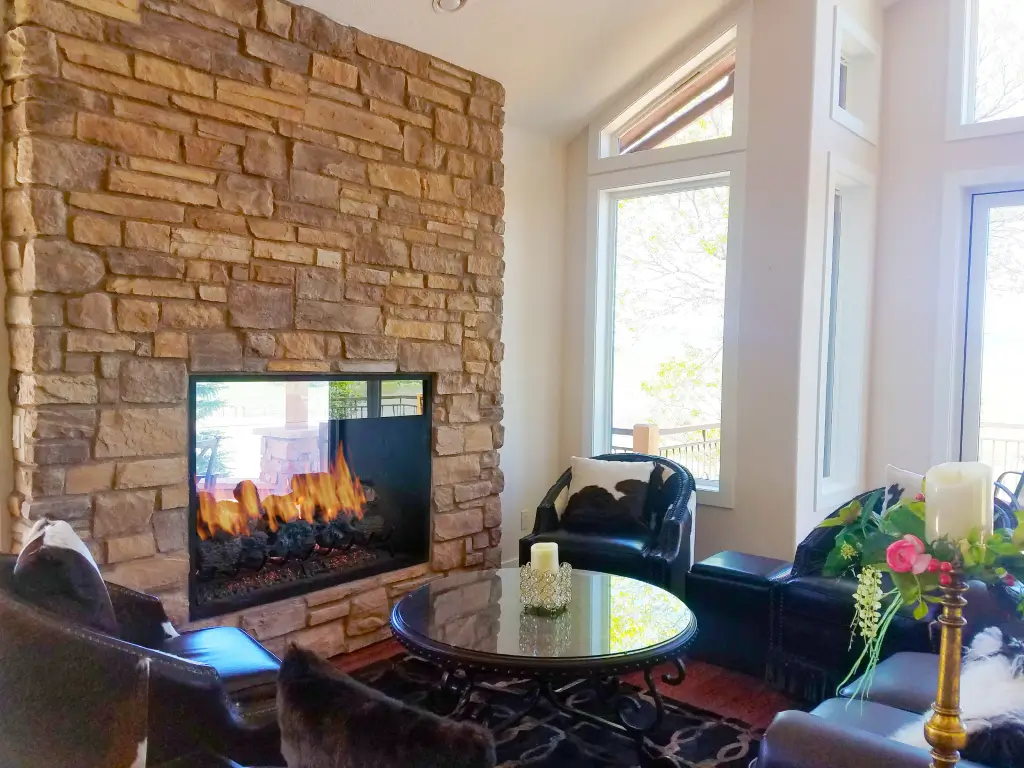
Sightlines, Placement and Planning: What Designers Should Consider Early
An indoor-outdoor gas fireplace impacts more than just the wall it’s on. Where you put it affects sightlines, furniture layout, material choices, and how the inside and outside spaces connect.
For architects, designers, and builders, this makes early coordination especially important. Plan the fireplace along with floor plans, elevations, doors and windows, ceiling details, finishes, and furniture layouts, instead of adding it after those choices are made.
A few questions can help guide the design:
- Which indoor and outdoor spaces should the fireplace connect?
- How will people move between those areas?
- What should the fireplace frame from each side?
- How will seating be arranged indoors and outdoors?
- How will the fireplace align with doors, windows, ceilings and exterior openings?
- How should materials on both sides relate to each other?
- What technical details should be coordinated before design decisions are finalized?
Answering these questions early helps the fireplace feel like an intentional part of the architecture, not a feature added to an already completed layout.
As we mentioned in our article on custom fireplace design considerations for architects, the best results come when you consider the fireplace early. This way, it supports the architecture instead of forcing the team to adjust the design later.
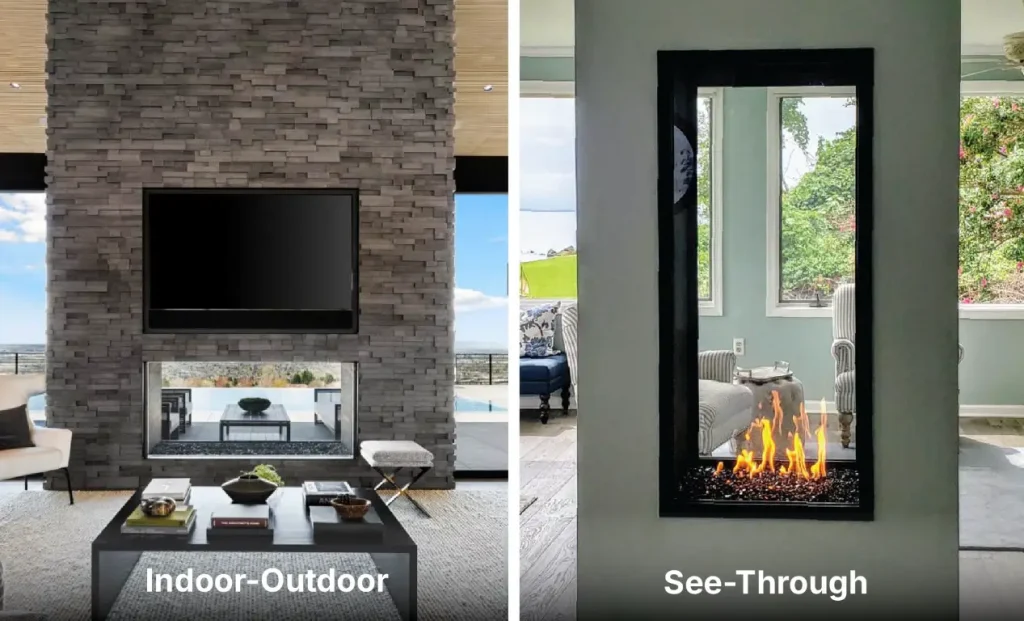
Indoor-Outdoor Gas Fireplace vs. See-Through Gas Fireplace: What’s the Difference?
Both indoor-outdoor and see-through gas fireplaces let you see the flame from more than one side. The main difference is where and how they are usually used.
| Planning question | Indoor-outdoor gas fireplace | See-through gas fireplace |
|---|---|---|
| Best use | Connecting an interior living space with an exterior living area | Connecting two interior rooms, zones or gathering areas |
| Design goal | Create continuity between indoor and outdoor living | Create shared visibility, flame movement and ambiance between interior spaces |
| Key planning focus | Exterior exposure, room transition, materials, sightlines and placement | Interior layout, wall scale, furniture arrangement and visibility from both sides |
| Common applications | Great rooms to patios, covered outdoor lounges, poolside spaces, outdoor kitchens | Living rooms to dining rooms, great rooms to lounges, bedrooms to sitting areas |
| Best fit | Homes designed around indoor-outdoor living spaces and entertaining | Projects that need a fireplace to connect two interior spaces |
When the goal is to connect an interior room with an exterior living area, an indoor-outdoor gas fireplace can help create that shared focal point between spaces. If you’re looking to connect two indoor spaces, a see-through gas fireplace may be a better fit.
The right choice depends on how the home is designed, how people will use the spaces, and the type of connection you want the fireplace to create.
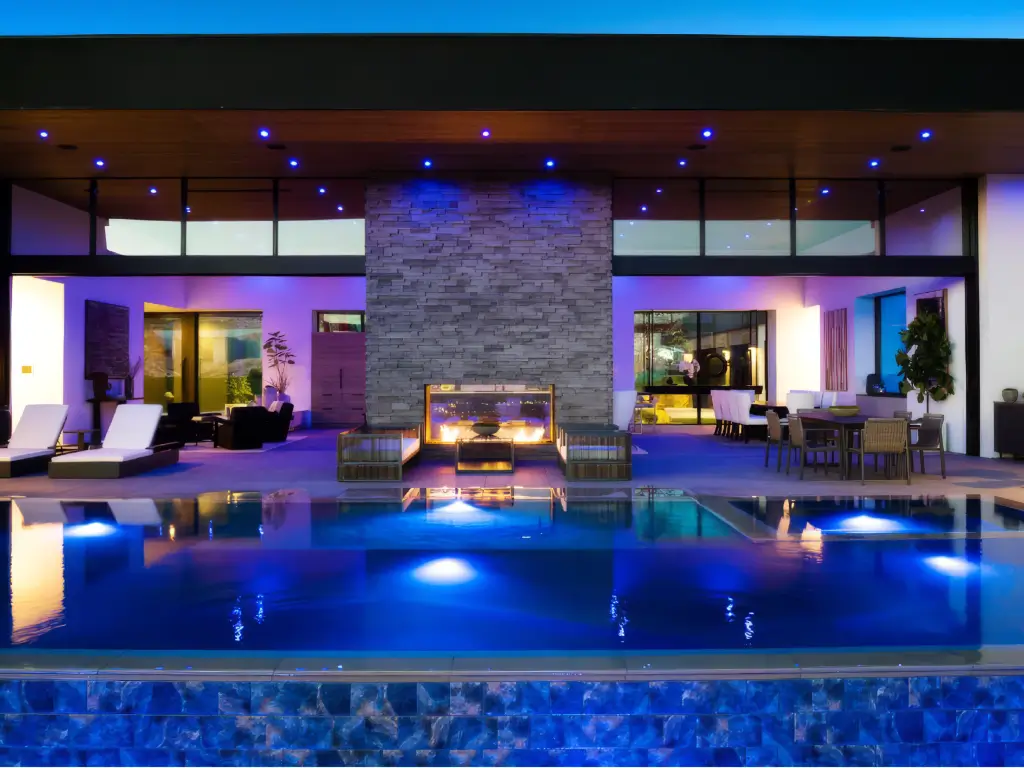
Where Indoor-Outdoor Fireplaces Make the Biggest Impact
An indoor-outdoor gas fireplace is especially well suited for homes focused on views, entertaining, and flexible living. Great rooms that open onto covered patios are a natural fit because the fireplace gives both areas a shared focal point while still letting each space serve its own purpose.
Living rooms that connect to outdoor lounges can benefit in the same way. Inside, the fireplace helps anchor the furniture and adds architectural interest. Outside, it creates a welcoming place to gather for quiet evenings, casual weekends, or time with family and friends.
Dining areas that open to terrace seating are another great use. A shared fireplace can extend the atmosphere of the dining space outdoors and encourage guests to stay longer after a meal. Pool decks, outdoor kitchens, lake houses, mountain homes, and hospitality-inspired homes can also benefit from indoor-outdoor living spaces that feel intentionally connected instead of designed as separate zones.
In each of these settings, the fireplace should do more than just separate two spaces. It should help both sides feel thoughtfully designed. To see more ways to connect indoor and outdoor areas, visit our indoor-outdoor gas fireplaces page.
Planning Checklist: Designing Around Both Sides of the Fireplace
Because an indoor-outdoor gas fireplace serves two spaces, both sides need careful planning. The inside may be more refined and architectural, while the outside needs to handle weather, materials, seating, and how it fits with the landscape.
Before moving deeper into design decisions, consider the following questions:
- ☐Which indoor and outdoor spaces should the fireplace connect?
- ☐What should the fireplace frame from each side?
- ☐How will people move between the two spaces?
- ☐Where will seating be placed indoors and outdoors?
- ☐How will the fireplace support entertaining and everyday use?
- ☐What materials need to feel connected across both sides?
- ☐How will weather exposure affect the outdoor side?
- ☐What role should supplemental warmth and ambiance play?
- ☐What technical details should be coordinated early?
These questions help homeowners and design teams look beyond just the product. They ensure the fireplace fits how people will use the space, from large gatherings to quiet moments by the patio.
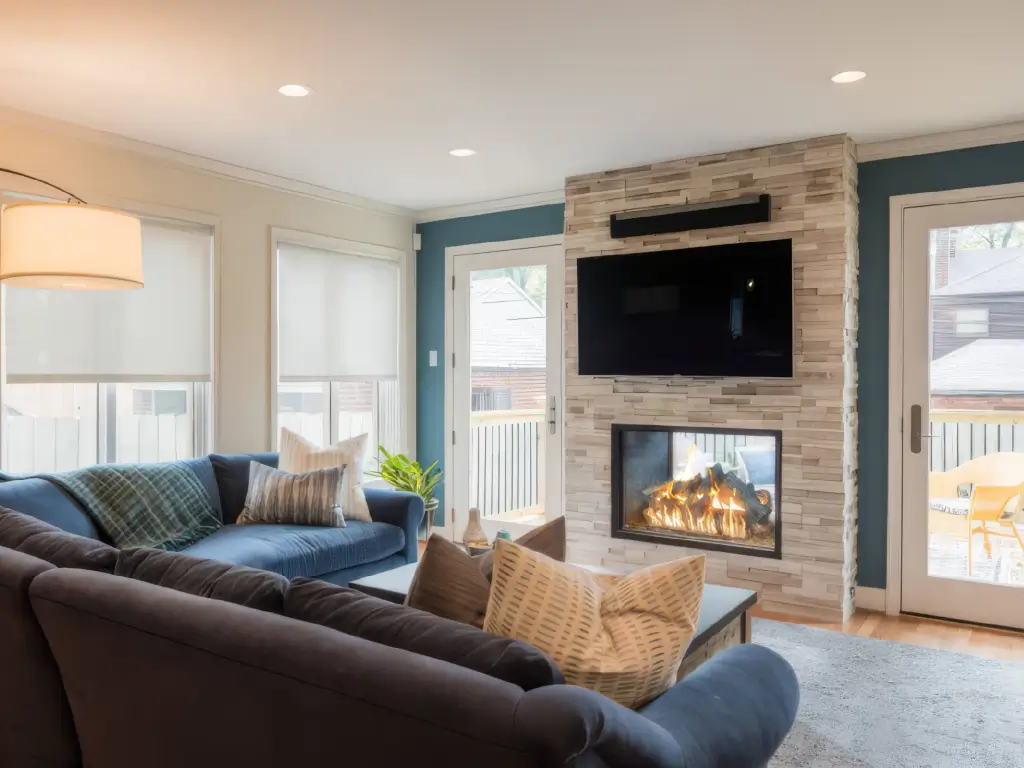
See the Connection in Real Spaces
Because indoor-outdoor and see-through gas fireplaces are so visual, it can be hard to judge their full impact from plans or product specs alone. Finished projects give homeowners, architects, and designers a clearer sense of scale, sightlines, flame presentation, material transitions, and how the fireplace will affect both spaces.
Looking at photos of completed projects can be especially helpful during planning. Finished spaces show how a fireplace can frame a view, divide space without closing it off or create a shared focal point between rooms or living areas.
Our see-through gas fireplace photo gallery has some great examples of how these details come to life in real homes, which can make it easier to decide which ideas will work well in your indoor-outdoor living space.
You can also watch Safe-Touch Blaze Fireplace That Transforms a Modern Remodel | Fireplace Stories with Chris Maxson to see how a fireplace design can influence the way a home looks, feels and functions.
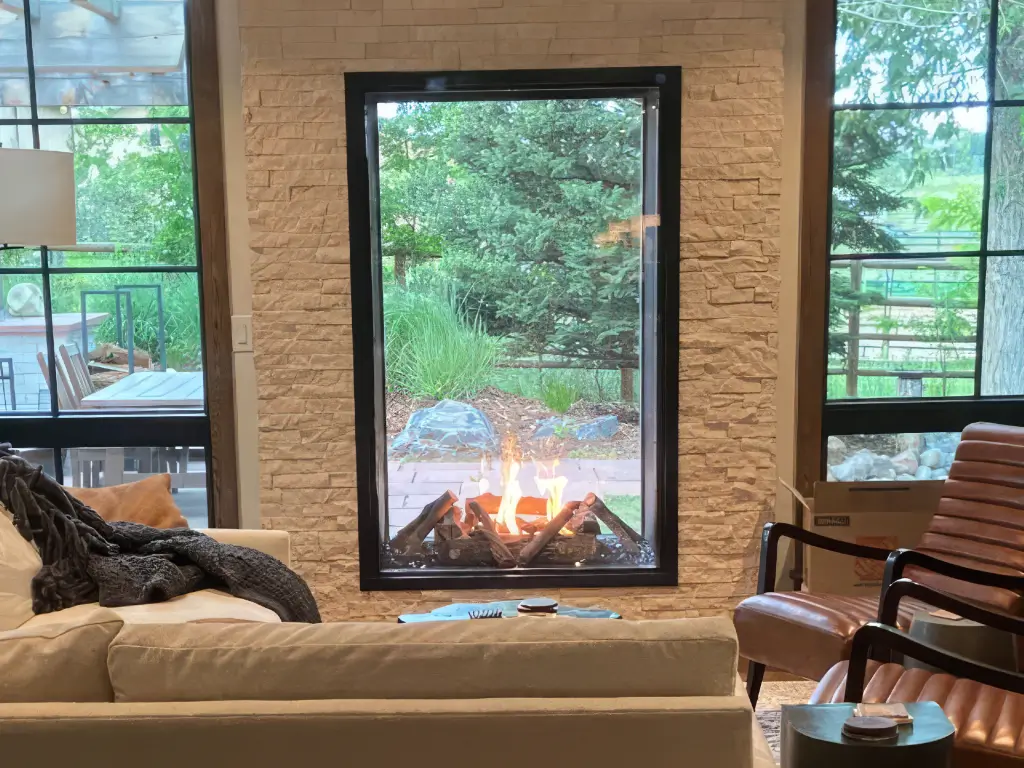
Key Takeaways: Designing Better Connections Between Living Spaces
An indoor-outdoor gas fireplace helps connect indoor and outdoor living areas, but the best results come from careful planning. Think about placement, sightlines, furniture arrangements, and surrounding materials early so the fireplace feels fully integrated into the home instead of added later.
As you plan the space, keep these points in mind:
- An indoor-outdoor gas fireplace can help connect interior and exterior living spaces through a shared focal point.
- Consider placement, sightlines and furniture arrangement before design details are finalized.
- The fireplace should support how people gather, entertain and move through the space.
- Materials need to feel intentional on both the indoor and outdoor sides.
- A see-through gas fireplace may be a better fit when the goal is to connect two interior spaces.
- Early coordination helps the fireplace feel balanced, purposeful and connected to the larger design.
Interested in how an indoor-outdoor gas fireplace could connect your living spaces? Complete the form below to talk with one of our experts.