
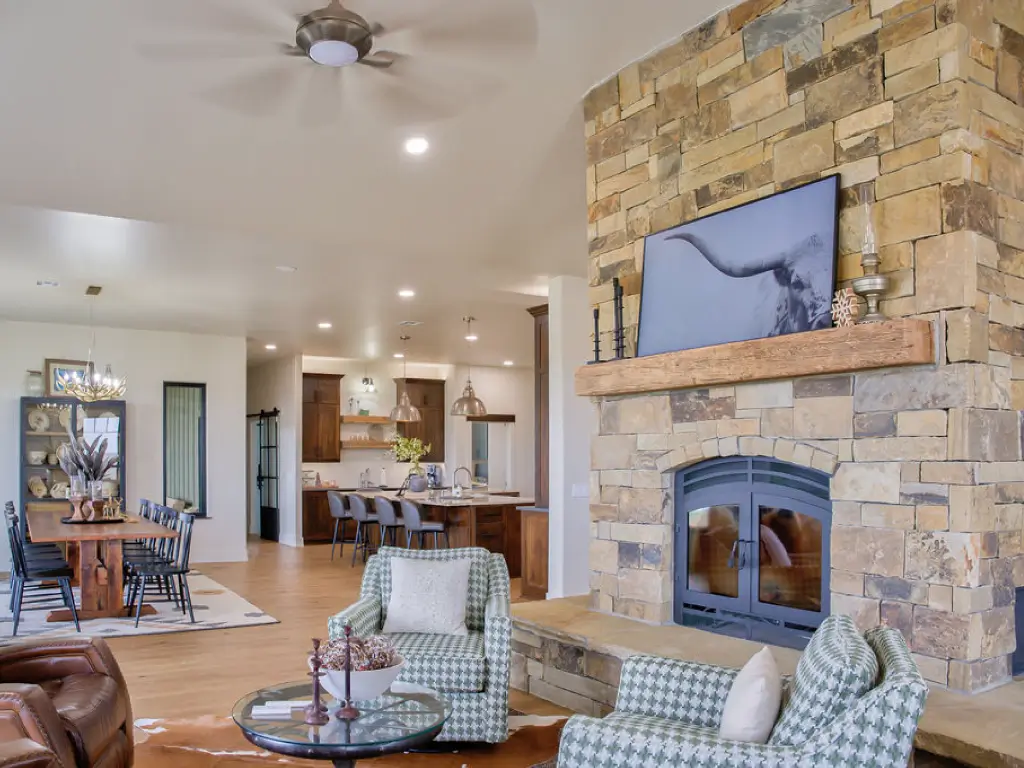
A Wood Fireplace Can Elevate a Room or Quietly Undermine it. The Difference is Planning.
Step into a well-composed home and you notice the harmony right away. Sightlines feel deliberate. Focal points are clear. Movement from one space to another feels natural rather than forced. In many refined floor plans, that sense of cohesion quietly begins with the presence of fire.
A wood fireplace is rarely just a feature on a wall. It is an architectural decision that can define how space looks, feels, and functions. When thoughtfully placed, it brings balance to a room that might otherwise feel visually flat or disconnected.
There’s also an undeniable emotional quality tied to a real wood fire. The sound, the glow, and the subtle movement of flame introduce depth that static design elements cannot replicate. That’s why luxury wood-burning fireplaces continue to hold their place in high-end residential design. They create atmosphere while reinforcing a strong visual anchor within the room.
The challenge is timing. Too often, fireplace placement is discussed after major design elements are already finalized. Flooring is installed. Millwork is specified. Ceiling treatments are locked in. At that stage, the fireplace becomes a constraint rather than a centerpiece, limited by framing, chimney routing, and available wall mass.
When fireplace placement is considered early in the design process, the outcome is significantly stronger. Architects and designers can align proportions, viewing height, and orientation with the room’s intended flow instead of adjusting around existing limitations.
A well-integrated fire feature should guide the space, not be squeezed into it. Luxury wood-burning fireplaces perform best when treated as foundational design elements. They establish hierarchy within the room, support natural gathering zones, and strengthen the architectural narrative.
Rather than forcing the fireplace to adapt to a completed layout, the more refined approach is to let the room evolve around it. This shift in planning perspective results in a space that feels intentional, balanced, and enduring instead of compromised.
Why Viewing Areas Defines Presence
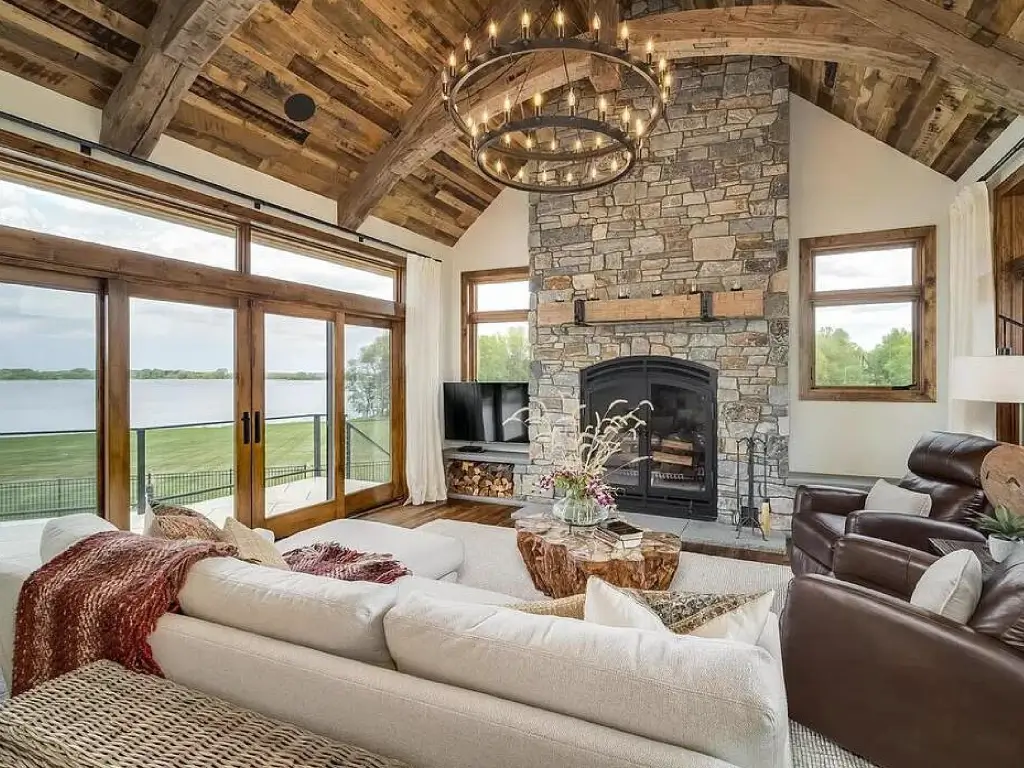
The fireplace viewing area is not just a technical dimension. It directly shapes how the fire is experienced within a space and how it interacts with the surrounding architecture.
When the opening is too small relative to the wall, the fire can feel visually lost, especially in rooms with large volumes, high ceilings, or wide spans of glass. The flame becomes secondary instead of central. In contrast, a properly scaled fireplace viewing area creates visual clarity. The fire is visible from multiple angles and distances, reinforcing its role as a true focal point rather than a background feature.
Proportion plays a critical role here. A generous viewing area allows the flame to register across the room, maintaining presence even against bold architectural elements like expansive windows, tall stone walls, or layered ceiling details. The result is a composition where the fire feels intentional and integrated instead of undersized.
This is one reason luxury wood-burning fireplaces are frequently specified in high-end residential projects. Their larger viewing areas are designed to complement grand interiors, not compete with them. The flame reads as a deliberate design statement, anchoring materials such as plaster, steel, or natural stone with visual confidence.
Rather than treating the opening as a minor specification, designers and architects often evaluate the fireplace viewing area as part of the room’s overall scale strategy. When sized correctly, it enhances sightlines, strengthens spatial balance, and ensures the fire remains a defining architectural element throughout the home.
To get an idea of available formats and configurations, check out our Types of Wood-Burning Fireplaces by Acucraft post. Selecting the appropriate viewing area early ensures the fireplace supports the architectural ambition of the space.
Proportions Matter More Than Square Footage
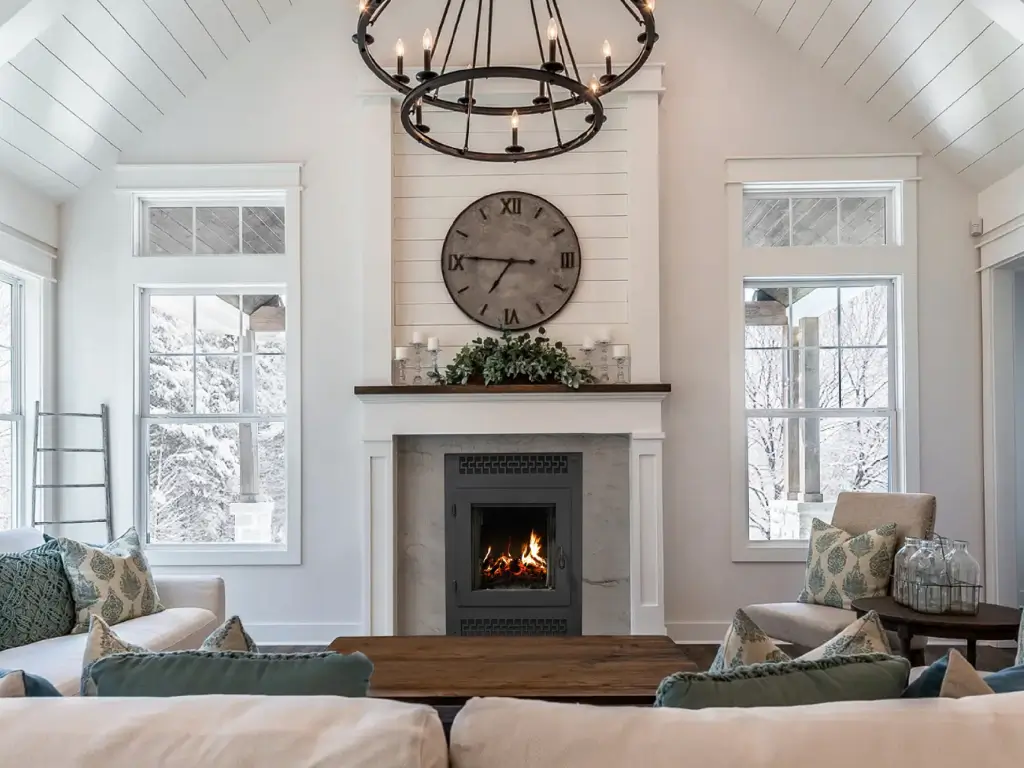
It’s a common assumption that bigger rooms automatically call for bigger fireplaces. However, scale in architectural design is not dictated by square footage alone. Proportion, context, and visual relationships ultimately determine what feels balanced within a space.
The width and height of a fireplace should align with the architecture around it. Ceiling elevation, wall span, built-ins, and even material breaks all shape how scale is perceived by the eye. A narrow fireplace placed on a broad wall can appear undersized and disconnected. Conversely, an overly tall unit in a room with lower ceilings can dominate the elevation and disrupt visual harmony.
Modern wood fireplaces perform best when they support the existing architectural rhythm rather than interrupt it. Clean lines, horizontal or vertical emphasis, and alignment with surrounding design elements allow the fireplace to feel integrated into the structure of the room. Instead of acting as an isolated feature, it becomes part of a cohesive visual language.
Careful proportional planning also ensures the fireplace complements adjacent finishes such as millwork, stone, plaster, or paneling. When dimensions are thoughtfully calibrated, these materials work together instead of competing for attention.
When overall fireplace size and visual balance are evaluated together, the final result feels deliberate and well-resolved. The space reads as cohesive, with the fireplace enhancing the architecture rather than overwhelming or fading into it.
Fireplace Placement as a Spatial Strategy
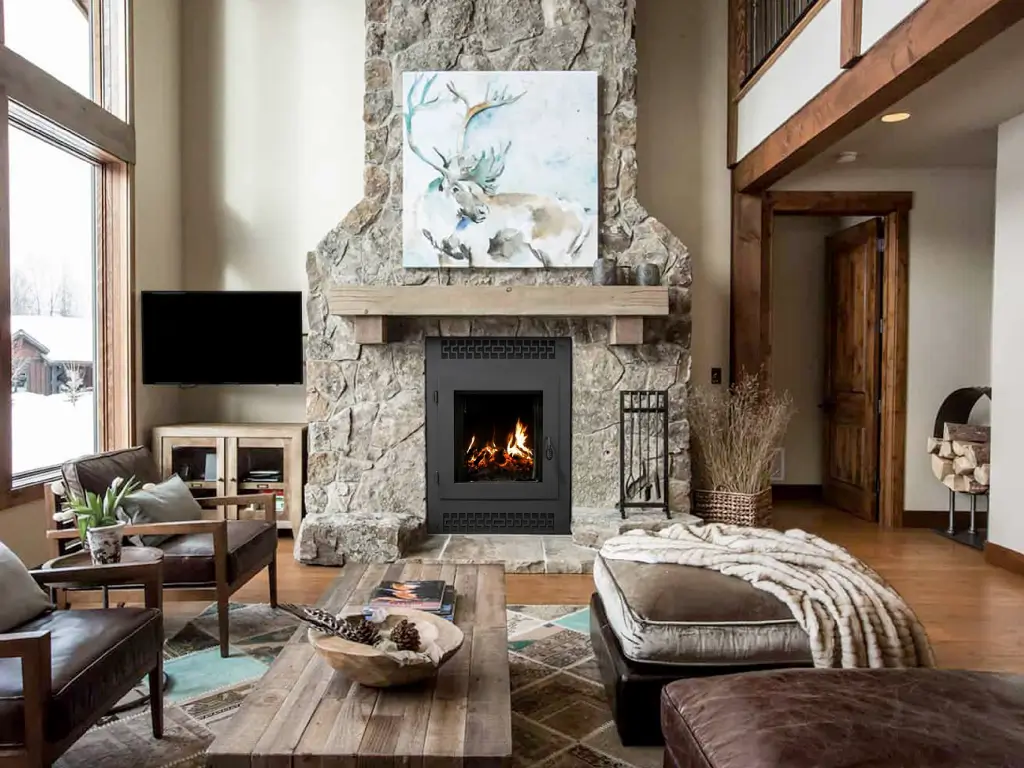
Fireplace placement is one of the most influential design decisions in a home. It affects how people enter a room, where they pause, and how they gather.
A fireplace placed at the end of a long sightline draws movement naturally toward it. Positioned between two zones, it can define space without introducing walls. In open-concept plans, placement often determines whether a room feels anchored or adrift.
Poor placement can complicate furniture layouts and disrupt circulation. Thoughtful placement clarifies purpose. It creates a center.
Wood fireplaces work best when they are treated as architectural organizers rather than decorative accents. For visual examples of placement in living rooms, great rooms, and beyond, explore our Design Ideas for Wood-Burning Fireplaces in Living Rooms, Great Rooms, and Beyond post.
When placement is considered early, the fireplace shapes the plan rather than adapting to it.
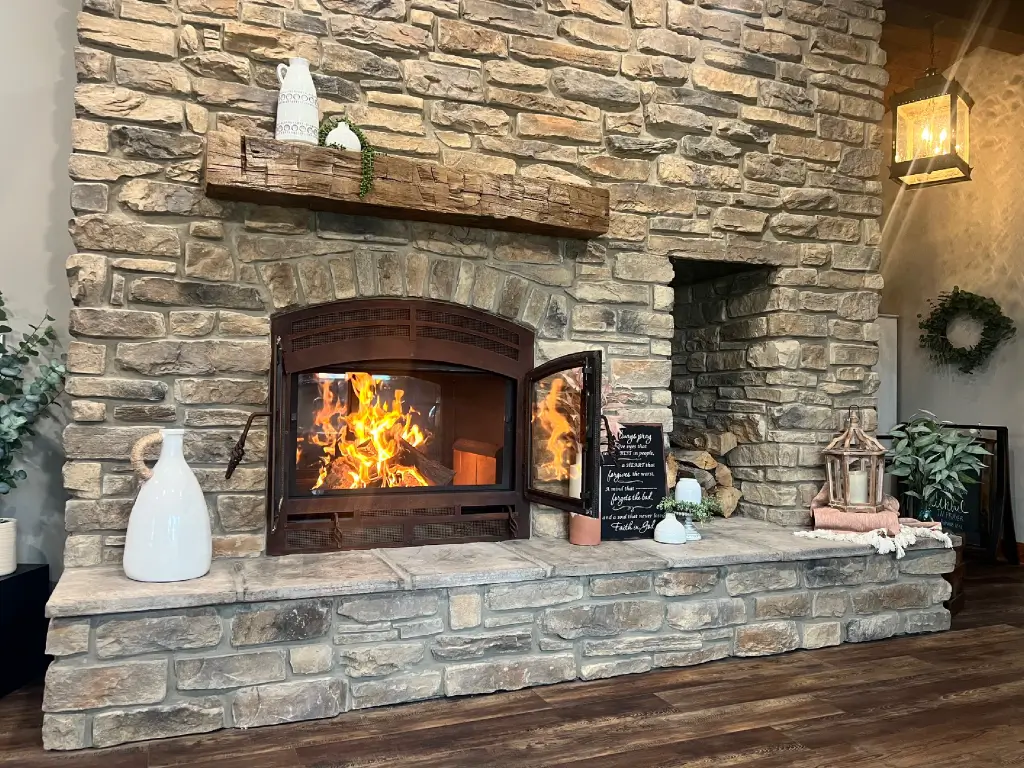
Engineering That Supports the Experience
Visual appeal may guide initial design decisions, but technical planning is what ensures a fireplace performs as beautifully as it looks. Clearances, chimney routing, combustion air, and ventilation strategy all play a critical role in how successfully a wood fireplace is integrated into a high-end architectural plan. When these performance factors are addressed early, designers avoid compromises later and achieve a solution that is both seamless in appearance and dependable in operation.
Precision coordination also allows the fireplace to function consistently within the home’s overall mechanical and structural framework. Proper airflow management, correct installation clearances, and well-planned venting paths contribute to safer operation and more efficient performance over time. These aren’t secondary considerations. They’re foundational to a refined installation.
Luxury wood-burning fireplaces should deliver more than visual impact. They should offer long-term reliability that matches the caliber of the surrounding design. This means specifying durable materials, engineered firebox construction, and installation methods built for sustained use rather than short-term aesthetics.
When a fireplace operates predictably and efficiently, it becomes a natural part of daily living instead of an occasional feature. The experience feels effortless, the performance remains consistent, and the fireplace transitions from a decorative element into a trusted architectural centerpiece that homeowners can enjoy year after year.
Ease of maintenance and thoughtful detailing also contribute to lasting satisfaction. For additional planning guidance, check out our Top 10 Tips for Planning a Wood-Burning Fireplace post.
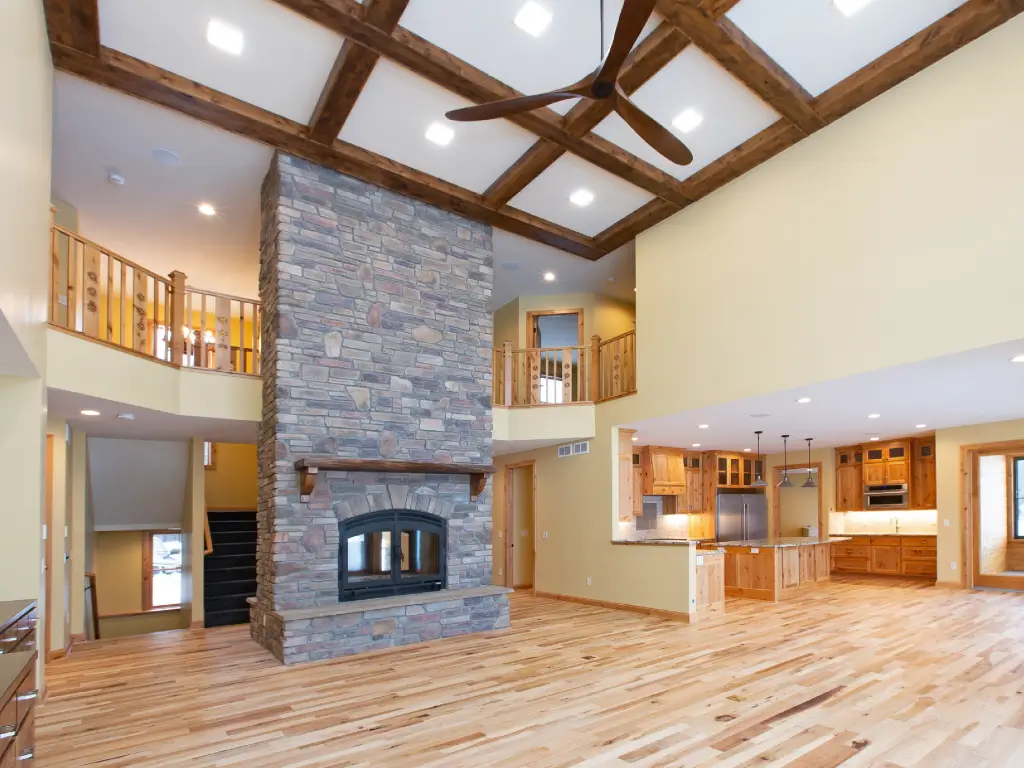
Where Wood Fireplaces Make the Biggest Impact
Wood fireplaces leave their greatest impact in areas where spatial scale and human activity naturally converge. These are the rooms where proportion, sightlines, and atmosphere must work together rather than independently.
In large great rooms with elevated ceilings and open floor plans, a well-considered fireplace viewing area helps establish visual weight. The presence of flame offsets the room’s volume, preventing the space from feeling cavernous while creating a grounded focal point that draws people inward. Instead of getting lost among tall walls and expansive glazing, the fire holds its presence and defines the center of the room.
More private environments, such as primary suites or quiet sitting areas, call for a more restrained strategy. In these settings, the fireplace is less about scale and more about ambiance. Placement often supports comfort and proximity, allowing the fire to contribute to a softer, more intimate architectural mood rather than commanding the entire elevation.
See-through and multi-room installations add another level of design refinement. By allowing flame to be experienced from multiple vantage points, the fireplace enhances spatial continuity while still maintaining clear separation between zones. This approach strengthens flow between adjoining areas without sacrificing definition, making the fire feel integrated into the broader architectural experience rather than confined to a single wall.
For help selecting the right configuration for your project, see our Hearthroom vs. American Series: Selecting the Best Wood-Burning Fireplace for Your Home post.
In each setting, viewing area, proportion, and placement work together. When aligned, they elevate the entire composition.
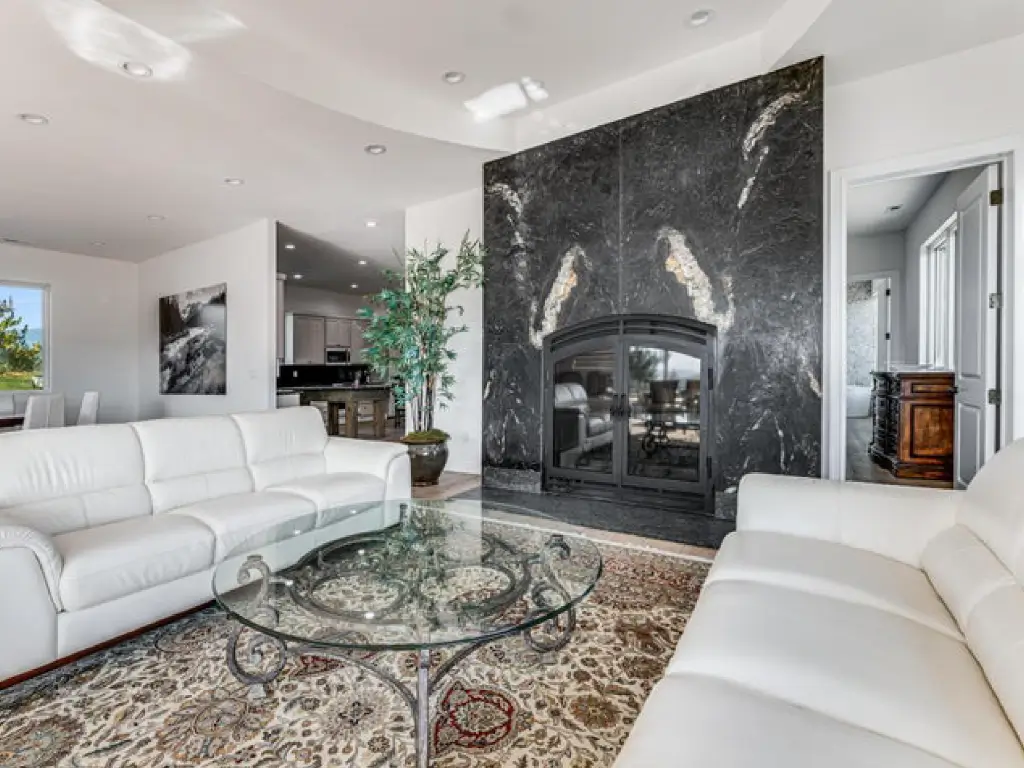
Designing Fire That Completes the Room
Viewing area, proportion, and fireplace placement are inseparable decisions. Each shape emphasizes the perception of fire and the overall atmosphere of the room.
When planned early, modern wood fireplaces become integral to the architecture rather than secondary to it. They support scale, enhance materiality, and create natural gathering points that feel permanent.
Acucraft partners with designers, architects, builders, and homeowners to create modern wood fireplaces and luxury wood-burning fireplaces that feel intentional and lasting.
Explore our Wood-Burning Fireplace Photo Gallery for inspiration and contact us to begin designing a fireplace that defines your space.